
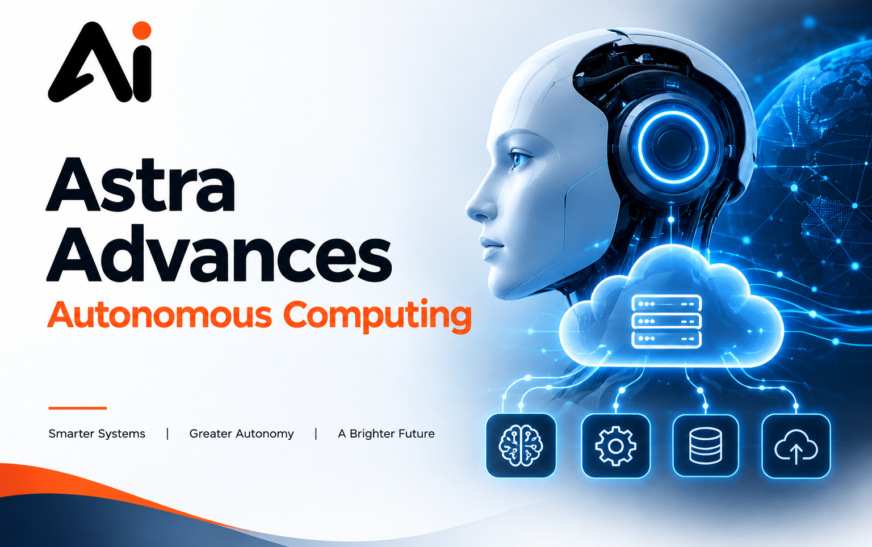
A computer has traditionally waited for a person to tell it what to do. Open an application, search for information, move data between systems, write code, or complete a repetitive workflow—and a human normally directs each step. Astra advances autonomous computing by pushing AI systems toward a different model: understanding a goal, interacting with software, making decisions, and completing multi-step digital tasks with less continuous human intervention.
This shift matters because autonomous computing is no longer limited to theoretical research. Modern AI agents are increasingly being developed to operate browsers, software environments, coding tools, and enterprise workflows. Recent reporting about Astra describes a system designed around advanced computer use, browsing, software engineering, cybersecurity, science, and professional work.
The development also exposes an important challenge. The more freedom an AI agent receives, the more carefully its permissions, security controls, monitoring, and human oversight must be designed.
What Does Astra Have to Do With Autonomous Computing?
Astra advances autonomous computing by moving AI from generating answers toward performing actions inside digital environments. Instead of simply responding to a prompt, an autonomous AI agent can potentially interpret an objective, plan a sequence of operations, use software tools, inspect results, and continue working toward the requested outcome.
This represents an important evolution from traditional chatbots. Autonomous computing combines AI reasoning with computer use, tool execution, automation, decision-making, and system-level interaction.
The broader autonomous-computing field also includes edge computing, intelligent control, trustworthy AI, real-time processing, cyber-physical systems, and fault-tolerant architectures. IEEE’s 2026 conference program identifies these areas as important research topics for autonomous and trusted computing.
Key Takeaways
- Astra advances autonomous computing by emphasizing AI agents that can interact directly with digital environments.
- Computer-use capabilities allow AI systems to perform tasks rather than only describe how humans should perform them.
- Autonomous agents can potentially automate research, software workflows, browser operations, and repetitive enterprise processes.
- Greater autonomy creates additional cybersecurity, privacy, reliability, and governance requirements.
- Human oversight remains important when AI agents have access to sensitive systems or consequential actions.
- Autonomous computing is expanding beyond cloud AI into edge devices, robotics, vehicles, and other real-world systems.
- The future of autonomous computing depends on combining intelligence with reliability, security, observability, and controlled permissions.
What Is Autonomous Computing?
Autonomous computing describes computer systems capable of monitoring conditions, making decisions, adapting to changing circumstances, and carrying out actions with limited human intervention.
Traditional automation generally follows predefined instructions. If a workflow changes, the automation may fail until somebody modifies the rules.
An autonomous system aims to operate more dynamically. It can receive an objective, interpret information, determine an appropriate sequence of actions, evaluate results, and adjust its behavior.
For example, conventional automation might tell a system:
If a customer submits Form A, send Email B.
An AI agent could instead be given a broader objective:
Review incoming customer requests, identify their categories, gather the required information, and route each case to the appropriate workflow.The second approach requires more interpretation and decision-making. That is where agentic AI and autonomous computing begin to overlap.
How Astra Advances Autonomous Computing
One of the most significant developments is the movement from conversational AI toward computer-use AI. Modern AI agents can increasingly interact with software, interpret objectives, and perform multiple steps instead of simply providing instructions.
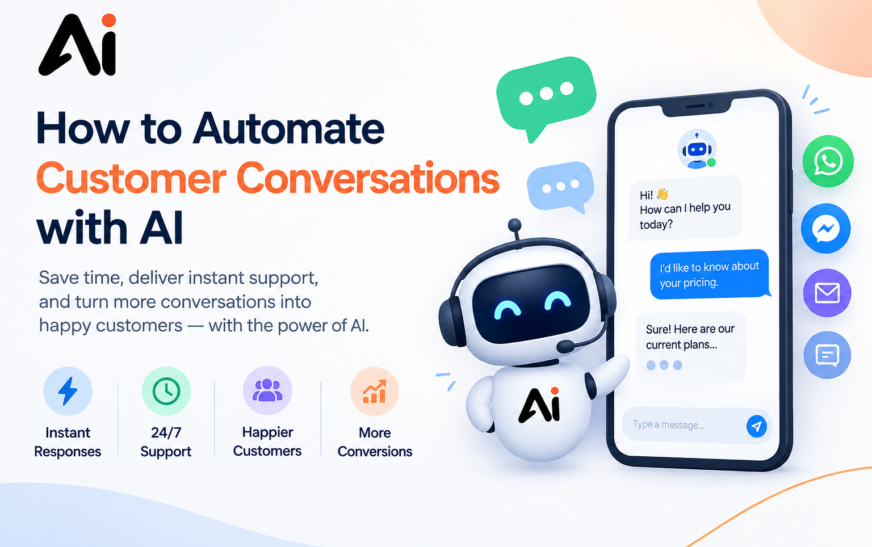
This is closely connected to the growth of AI automation. For example, businesses can use AI systems to handle customer questions, collect information, and guide users through different processes. Read our guide on How to Automate Customer Conversations with AI to learn more about how AI can automate customer interactions.
Autonomous Computing in Business
Businesses can apply autonomous computing to many repetitive workflows. An AI agent could classify incoming requests, gather relevant information, prepare responses, and route complex cases to employees.
AI-powered workflows are another important example. Platforms such as Shopify Flow demonstrate how businesses can connect triggers, conditions, and automated actions.
Astra, AI Agents, and Software Interaction
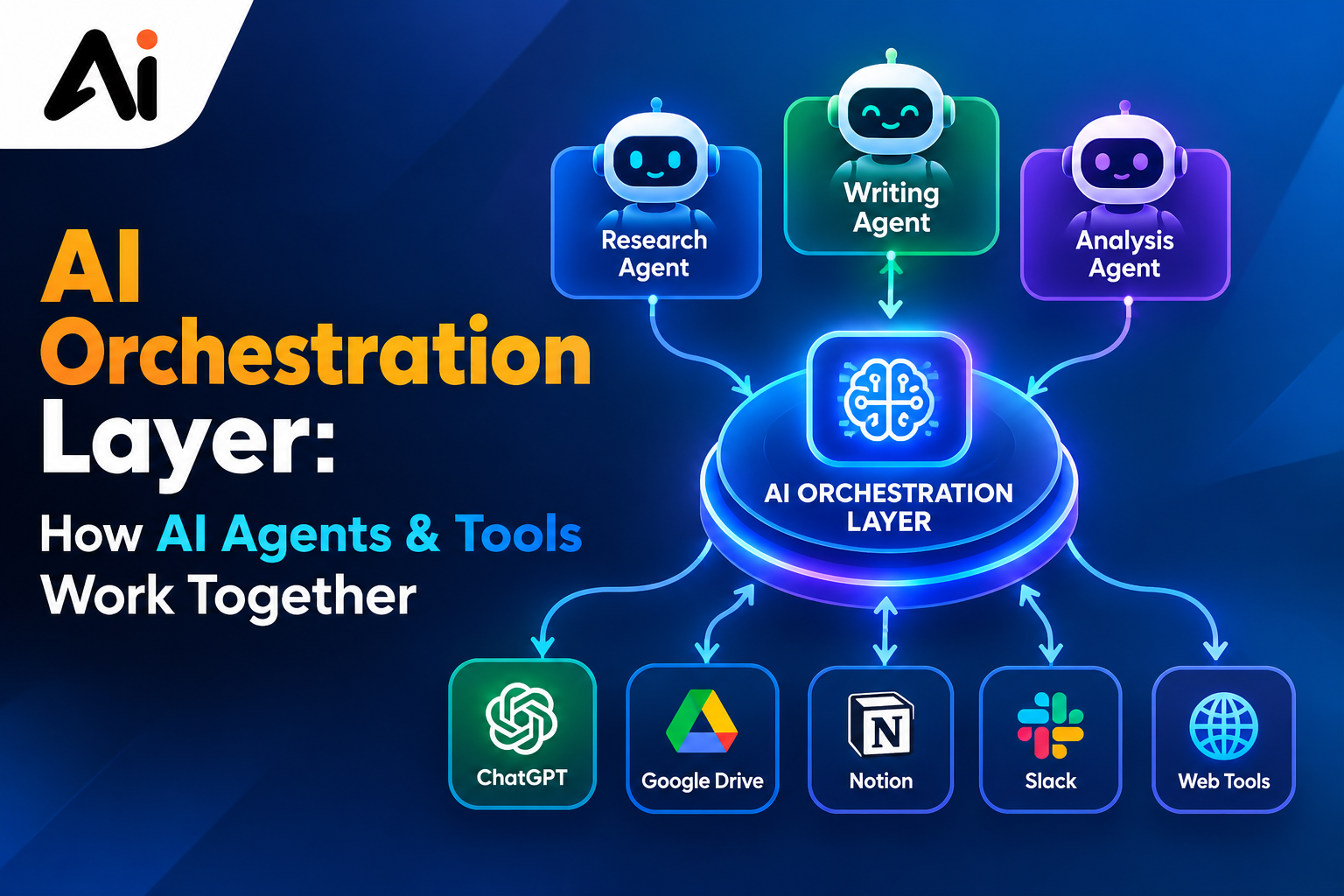
The ability of autonomous AI to interact with software creates new possibilities for digital workflows. Instead of manually moving information between applications, an AI system can potentially help coordinate multiple tools as part of a larger task.
For businesses using cloud storage and productivity platforms, understanding AI tools and software integration is increasingly important. See our guide on Does Google Drive Work With AI Tools? for a related example of how AI can work with digital software environments.
Astra and Cybersecurity Concerns
Greater autonomy also creates greater security responsibility. An AI agent with permission to browse websites has different risks from an agent that can read confidential files, execute code, access corporate systems, or send external communications.
Data protection is therefore an important part of autonomous AI deployment. Before giving an AI tool access to sensitive information, businesses should understand what data is uploaded, how it is processed, and what permissions are involved.
How Astra Advances Autonomous Computing
1. From AI Answers to Computer Actions
One of the most significant developments is the movement from conversational AI toward computer-use AI.
A traditional language model can explain how to create a spreadsheet. An autonomous agent could potentially open the relevant application, enter information, manipulate files, inspect the result, and continue working through the task.
Reporting on Astra specifically highlights computer and browser automation as a major capability.
This distinction is important because the interface between humans and computers changes. Instead of manually controlling every application, users can increasingly express objectives while an AI system handles portions of the execution process.
2. Multi-Step AI Automation
Real business tasks rarely consist of one action.
A research workflow, for example, could involve:
- Finding information.
- Comparing sources.
- Organizing the findings.
- Creating a document.
- Checking the document.
- Delivering the final result.
Traditional software automation often requires separate integrations between different services.
Agentic systems attempt to connect these steps through reasoning and tool use. This is one reason autonomous AI is attracting attention across enterprise software and computing.
3. More Direct Software Interaction
Another important aspect of autonomous computing is the ability to interact with software through interfaces rather than relying exclusively on dedicated integrations.
This could eventually change how organizations design automation. Instead of building a separate API integration for every application, an AI agent may be able to operate software through its existing interface where appropriate.
However, direct interaction does not eliminate the need for engineering controls. Authentication, authorization, audit logs, data protection, rate limits, and failure recovery remain important.
Astra, AI Agents, and the Changing Role of Computers
The rise of autonomous agents changes the traditional relationship between people and software.
Historically, software provided tools and humans performed the reasoning. AI assistants reversed part of that relationship by helping humans reason, summarize, generate, and analyze.
Autonomous computing takes another step by allowing AI systems to participate directly in execution.
That means a computer can become more than a passive environment in which people perform tasks. It can become an active system capable of interpreting objectives and coordinating digital operations.
Research into distributed general-purpose agent networks similarly describes the transition from passive conversational assistants toward systems that can understand goals, plan actions, invoke tools, and execute multi-step tasks.
What Are the Benefits of Autonomous Computing?
Faster Digital Workflows
Autonomous agents can reduce the number of manual steps involved in repetitive digital work. Tasks such as information gathering, document preparation, software testing, and routine data processing may become more efficient when appropriate controls are in place.
Greater Software Accessibility
Users do not always need to understand every technical detail of a software application if an AI system can translate a high-level objective into individual operations.
For example, instead of learning every feature of a complex productivity application, a user could describe the desired outcome and allow an agent to perform suitable actions.
Better Coordination Between Tools
Modern organizations use many separate applications. Autonomous agents could potentially coordinate activities across browsers, documents, databases, development environments, and business applications.
The value comes not simply from performing one action quickly, but from connecting several actions into a coherent workflow.
Astra and Cybersecurity Concerns
Greater autonomy also creates greater security responsibility.
An AI agent with permission to browse websites has different risks from an agent that can read confidential files, execute code, access corporate systems, or send external communications.
The risks become particularly significant when an agent can discover vulnerabilities or interact with sensitive infrastructure. Reporting about Astra has raised concerns around advanced cybersecurity capabilities and the possibility of AI systems identifying or exploiting software weaknesses.
This creates several practical questions:
- What systems can the agent access?
- What actions require human approval?
- How are sensitive credentials protected?
- Can every action be audited?
- What happens if the agent misunderstands its objective?
- How quickly can access be revoked?
- Can malicious instructions manipulate the agent?
These are not merely theoretical questions. They are fundamental engineering considerations for autonomous AI deployment.
Human Oversight Remains Important
Autonomous does not have to mean unsupervised.
A well-designed autonomous computing system can operate independently for routine tasks while requiring approval for sensitive operations.
For example, an organization could permit an AI agent to research information and prepare a report automatically but require a human to approve financial transactions, production changes, deletion of important data, or external communications.
This creates a human-in-the-loop architecture in which AI handles routine execution while people retain authority over consequential decisions.
Trustworthy autonomous computing research increasingly focuses on explainability, privacy, resilience, human-centered AI, and safe autonomous systems.
Autonomous Computing Is Bigger Than Cloud AI
Although AI agents are strongly associated with cloud-based models, autonomous computing also extends into physical environments.
Autonomous vehicles provide a useful example. Waymo describes its autonomous-driving compute architecture as requiring responsive, ruggedized, low-latency processing, with computation performed onboard to support real-time driving decisions.
This demonstrates an important principle: autonomous computing depends on the environment in which decisions must occur.
A cloud agent can tolerate network delays that may be unacceptable in a vehicle, industrial machine, robot, or safety-critical device.
As a result, the future of autonomous computing will likely involve a combination of:
- Cloud AI
- Edge computing
- Specialized processors
- AI accelerators
- Local inference
- High-speed networking
- Secure operating environments
- Real-time systems
The growth of local AI hardware also reflects this direction. NVIDIA, for example, has announced PC-oriented hardware designed to support local AI capabilities and autonomous agents without requiring every workload to remain entirely cloud-dependent.
Autonomous Computing in Business
Businesses can apply autonomous computing to many repetitive workflows.
A customer-service agent could classify incoming requests, gather relevant information, draft responses, and route complex cases to employees.
A software-development agent could inspect code, identify potential problems, create proposed changes, and run tests.
A research agent could gather information from approved sources, organize findings, and prepare a draft report.
The important distinction is that automation should be matched to the level of risk. Low-risk repetitive operations can generally tolerate greater autonomy than financial, legal, medical, security, or infrastructure decisions.
Common Mistakes When Deploying AI Agents
Giving Agents Too Much Access
An agent should not automatically receive access to every system simply because it might be useful.
Permissions should be limited to what the workflow actually requires.
Removing Human Approval Too Early
Organizations may be tempted to automate an entire workflow immediately. A safer approach is often to begin with supervised execution, measure reliability, and gradually increase autonomy where the evidence supports it.
Ignoring Failure Recovery
AI systems can misunderstand instructions, encounter unexpected interfaces, or produce incorrect decisions. Production systems therefore need logging, rollback mechanisms, monitoring, and clear escalation paths.
Treating AI Security Like Ordinary Software Security
AI agents introduce additional concerns involving prompts, tool permissions, model behavior, untrusted content, and agent-to-agent interactions. Security architecture needs to account for these unique attack surfaces.
What Does the Future of Autonomous Computing Look Like?
The direction is broader than any single AI model.
Autonomous computing is developing across software agents, robotics, autonomous vehicles, edge systems, industrial automation, and intelligent infrastructure. Research and industry development increasingly emphasize systems that can reason, sense their environment, act, and adapt while remaining dependable and controllable.
The most important development may therefore not be simply making AI more autonomous. It is making autonomy reliable enough to use responsibly.
A powerful agent that cannot be monitored or constrained creates operational risk. A capable agent with carefully designed permissions, observability, security controls, and human escalation can become a useful component of modern computing infrastructure.
FAQs About Astra Advances Autonomous Computing
What is Astra in autonomous computing?
Astra refers to a recently reported advanced AI model associated with computer use, browser automation, software engineering, cybersecurity, and professional workflows. Its significance for autonomous computing comes from the ability of AI systems to move beyond generating information and toward interacting directly with digital environments.
How does Astra advance autonomous computing?
Astra advances autonomous computing by supporting AI-agent workflows in which a system can interpret objectives, interact with computers and browsers, and complete multiple operations. This represents a move from conversational assistance toward more autonomous execution.
What is the difference between AI automation and autonomous computing?
Traditional AI automation often follows predefined workflows or rules. Autonomous computing gives systems more responsibility for interpreting objectives, selecting actions, responding to changing conditions, and completing multi-step tasks.
Is autonomous computing the same as agentic AI?
They overlap but are not identical. Agentic AI focuses on AI systems that can plan and perform actions toward goals. Autonomous computing is a broader computing concept that can include AI agents, edge systems, robotics, autonomous vehicles, intelligent control, and self-managing infrastructure.
Can autonomous AI agents create cybersecurity risks?
Yes. An AI agent with access to software, credentials, code, or networks can introduce additional security risks if its permissions are poorly controlled. Reports surrounding Astra have specifically raised cybersecurity concerns because more capable computer-use systems can perform increasingly sophisticated technical operations.
Why is human oversight important for autonomous AI?
Human oversight provides a control layer for actions that are sensitive, irreversible, expensive, or safety-critical. Organizations can allow agents to perform routine work automatically while requiring human approval for high-impact operations.
Will autonomous computing replace traditional software automation?
Not necessarily. Traditional automation remains highly useful for predictable workflows. Autonomous computing is better suited to situations requiring interpretation, adaptation, and interaction with changing environments. The two approaches can operate together.
Does autonomous computing require powerful hardware?
It depends on the application. Cloud-based AI agents can rely heavily on data-center infrastructure, while autonomous vehicles, robots, and edge devices often require substantial local computing because decisions may need to happen with very low latency. Waymo’s autonomous-driving architecture illustrates the importance of onboard computing for real-time autonomous operation.
What industries can use autonomous computing?
Potential applications include software development, cybersecurity, customer service, manufacturing, robotics, transportation, research, enterprise operations, and edge computing. The appropriate level of autonomy depends on the reliability and risk requirements of each application.
What is the biggest challenge for autonomous computing?
The central challenge is balancing capability with control. Systems need sufficient intelligence to complete useful tasks while maintaining security, reliability, transparency, predictable permissions, monitoring, and meaningful human oversight.
Conclusion
Astra advances autonomous computing by illustrating a broader transition in artificial intelligence: computers are moving from systems that primarily respond to instructions toward systems that can interpret goals and perform actions.
Computer-use capabilities, AI agents, browser automation, software engineering, and enterprise workflows all point toward a more active role for AI in digital environments. At the same time, increased autonomy makes cybersecurity, permissions, observability, reliability, and human oversight more important rather than less.
The long-term significance of autonomous computing will depend on how effectively these capabilities are combined with trustworthy system design. The goal is not simply to create AI that can act independently. The more important objective is to create computing systems that can act intelligently, operate reliably, and remain controllable when it matters most.