
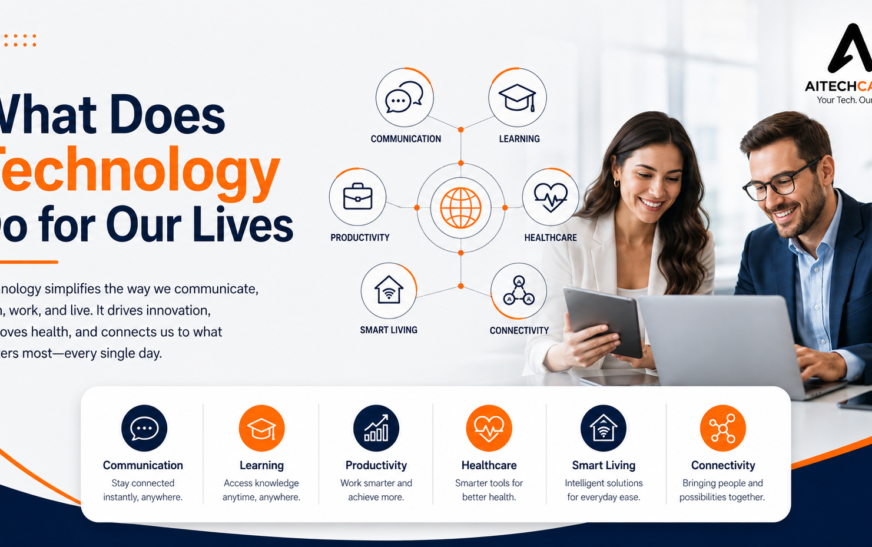
Ask most people what does technology do for our lives, and they’ll point to their phone first. But the honest answer runs much deeper than that. Technology has quietly rewired how we work, communicate, learn, heal, and even relax, often in ways we’ve stopped noticing because they’ve become so ordinary.
This piece looks at the real, practical ways technology shapes daily life, along with a fair look at what it costs us in return.
Technology Has Redefined How We Communicate
Thirty years ago, staying in touch with someone abroad meant an expensive phone call or a letter that took days to arrive. Now, a video call connects two people on opposite sides of the world in seconds, at effectively no cost.
This shift has done more than make communication faster. It’s changed the shape of relationships themselves. Families separated by distance stay closer through daily messages. Remote teams collaborate as though they’re in the same room. Even niche communities, built around a shared hobby or condition, now form easily online in a way that simply wasn’t possible before.
It Has Changed How and Where We Work
Technology’s effect on work goes far beyond replacing paper with spreadsheets. Cloud-based tools now let people collaborate on the same document in real time, from different cities or countries, without ever emailing a file back and forth.
Remote and hybrid work exist largely because of this shift. Video conferencing, project management platforms, and shared cloud storage removed the physical office as a requirement for many jobs. For businesses, this has opened up hiring pools well beyond a single city, while for workers, it’s added flexibility that didn’t exist a generation ago.
Healthcare Has Become More Accurate and More Accessible
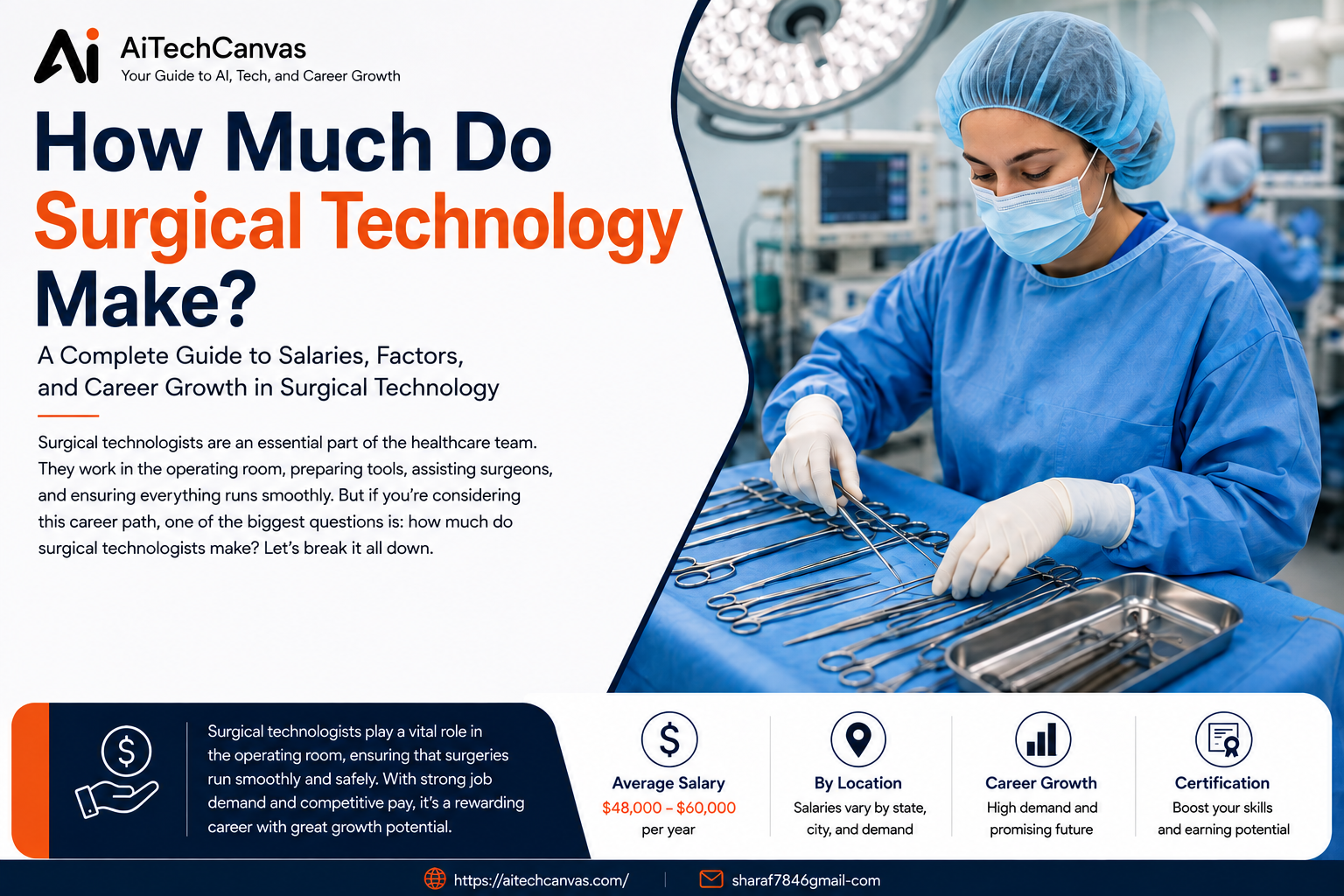
Medical technology is one of the clearest examples of what technology does for our lives in a way that’s genuinely life-changing. Diagnostic tools now catch conditions earlier and more accurately than a purely manual examination could. Wearable devices track heart rate, sleep, and activity continuously, giving both patients and doctors far more data than an occasional check-up ever provided.
Telemedicine has also made healthcare more accessible, particularly for people in rural areas or those with mobility limitations. A consultation that once required travel and a half-day off work can now happen from a living room.
Education Has Moved Beyond the Classroom Walls
Access to knowledge used to depend heavily on where you lived and which school you could attend. Online courses, recorded lectures, and open educational platforms have loosened that constraint considerably. A student in a small town can now study the same material as one at a major university, often for free or at a fraction of the traditional cost.
This hasn’t replaced traditional education, and it shouldn’t be treated as though it has. But as a supplement, and in some cases a genuine alternative, it’s expanded who gets to learn and how.
Everyday Convenience Is Easy to Overlook
Some of technology’s biggest effects are the ones we barely notice anymore. Online banking removed the need to queue at a branch for routine transactions. Navigation apps have made getting lost in an unfamiliar city rare. Smart home devices adjust lighting, heating, and security without anyone lifting a finger.
None of these feel remarkable individually. Together, they’ve quietly reduced the daily friction of ordinary life in a way that’s easy to take for granted until it’s gone.
The Trade-Offs Worth Being Honest About
A fair answer to what technology does for our lives has to include its downsides, not just its benefits.
- Constant connectivity can blur the line between work and rest. Being reachable at all hours isn’t the same as being productive, and it often comes at the cost of genuine downtime.
- Screen time affects attention and sleep. Research consistently links heavy device use, particularly before bed, to disrupted sleep patterns.
- Digital dependence creates new vulnerabilities. A service outage or data breach can disrupt daily life in ways that simply didn’t exist when systems were less connected.
- Not everyone benefits equally. The digital divide means access to fast internet and modern devices still isn’t universal, which can widen existing inequalities rather than close them.
A balanced view treats technology as a tool with real trade-offs, not something to be embraced or rejected wholesale.
How Businesses Are Adapting to These Shifts
Companies that want to make the most of what technology offers usually need more than off-the-shelf software. Many now work with specialists to build tools and systems suited to how their teams actually operate, rather than forcing a generic solution to fit. Explore our technology solutions to see how this kind of tailored approach works in practice.
Where Technology Is Headed Next
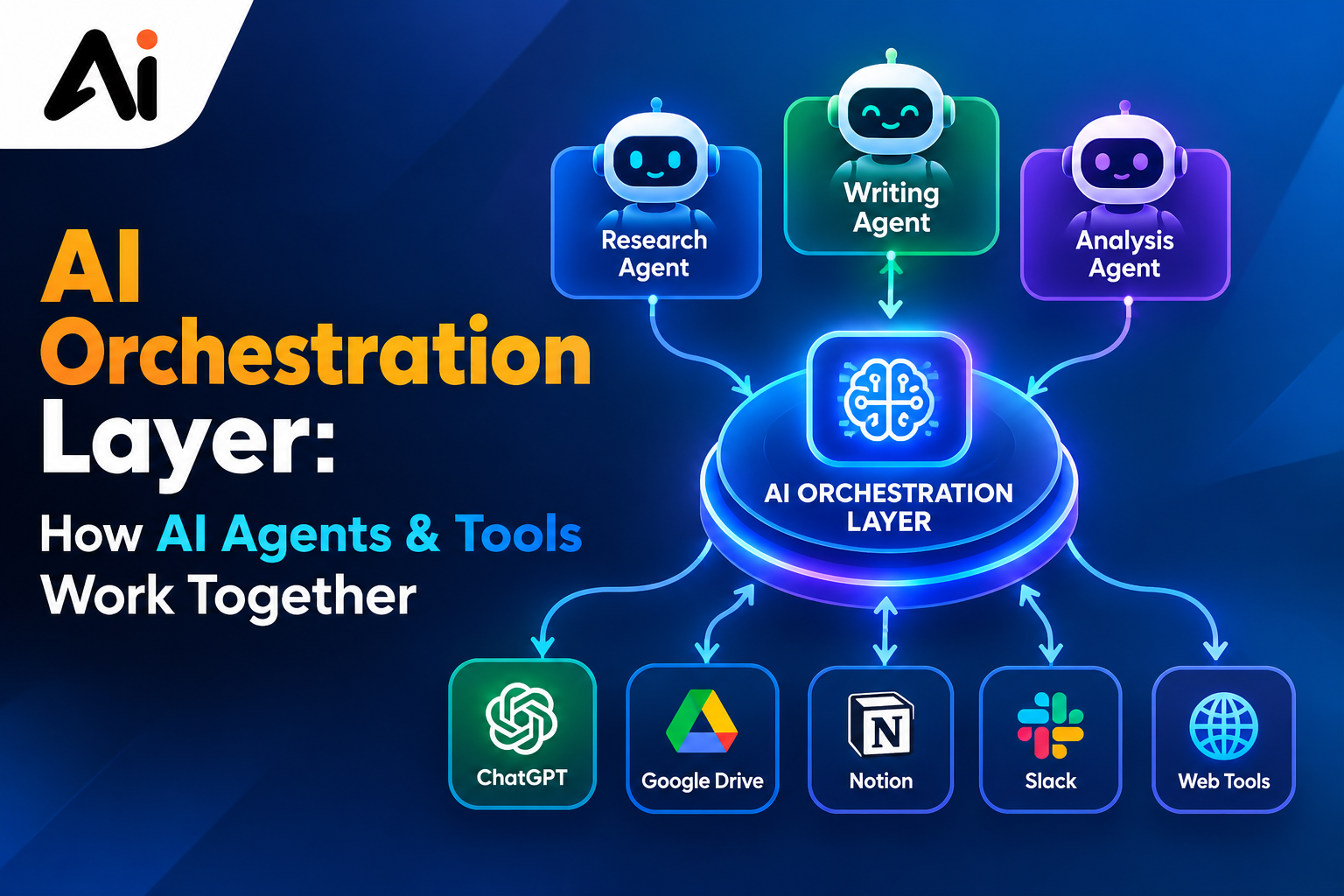
Artificial intelligence, in particular, is pushing this evolution further. Tools that once required specialist skills to operate are becoming accessible to non-technical users, changing who gets to build, automate, and create. Small businesses especially stand to gain from this shift. Our guide on the best technology solutions for small businesses breaks down what’s changing and why it matters.
Final Thoughts
So, what does technology do for our lives? It shortens distances, speeds up healthcare, opens up education, and removes countless small frictions from the day-to-day. It also asks something back, in the form of constant connectivity, screen fatigue, and new dependencies we’re still learning to manage. The honest picture isn’t purely positive or negative. It’s a trade, and understanding both sides of it is what lets us use technology deliberately, rather than simply being carried along by it.
Frequently Asked Questions
1. What does technology do for our lives on a daily basis?
It simplifies routine tasks like banking, navigation, and communication, while also enabling remote work, faster healthcare access, and continuous learning opportunities.
2. How has technology changed the way we work?
Cloud-based tools and video conferencing have removed the need for a physical office for many jobs, enabling remote and hybrid work models that didn’t widely exist a decade ago.
3. Does technology have a negative impact on our lives?
It can. Constant connectivity, screen-related sleep disruption, and digital dependence are genuine downsides that come alongside the convenience technology provides.
4. How has technology improved healthcare?
It has enabled earlier and more accurate diagnosis, continuous health monitoring through wearable devices, and remote consultations through telemedicine, particularly benefiting people in rural or underserved areas.
5. What role does artificial intelligence play in how technology affects our lives?
AI is making advanced tools more accessible to non-technical users, automating routine tasks, and changing how individuals and businesses approach work, creativity, and problem-solving.