
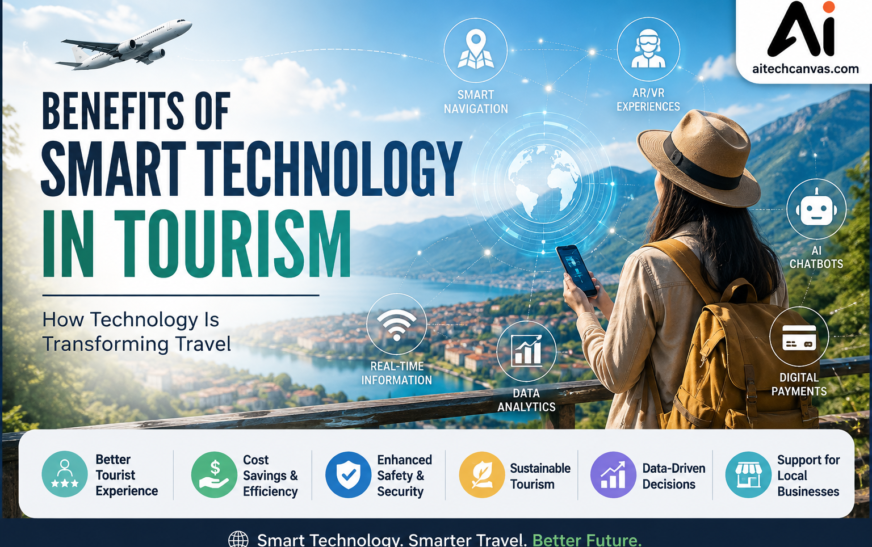
Smart technology in tourism uses digital tools such as AI, mobile apps, IoT sensors, and data analytics to make travel more convenient, personalized, safe, and efficient. It gives travelers real-time information and personalized recommendations while helping destinations manage crowds, conserve resources, improve services, and support local businesses. Technology has become an essential part of modern travel. From mobile apps for tourism and digital payments to artificial intelligence, Internet of Things devices, and augmented reality, technology is changing how people plan, book, and experience trips.
The benefits of smart technology in tourism go beyond convenience. Modern smart tourism solutions can provide personalized travel experiences, improve customer service, increase safety, reduce operational costs, and help destinations manage tourism more efficiently. For businesses, digital transformation in tourism also creates new opportunities to understand travelers and deliver better services.
But what is smart tourism technology, and how is it changing the tourism industry? This guide explores the major benefits, technologies, applications, challenges, and future of smart tourism.
What Is Smart Technology in Tourism?
Smart technology in tourism refers to the use of digital technologies, connected devices, data, artificial intelligence, and automated systems to improve travel experiences and tourism operations.
Smart tourism technology connects travelers, tourism businesses, attractions, hotels, transportation providers, and destinations through digital platforms and real-time information.
Common examples include:
- AI-powered travel assistants
- Mobile apps for tourism
- IoT-enabled devices
- Smart hotels
- Digital payment systems
- Online booking platforms
- Augmented reality experiences
- Big data and tourism data analytics
- Smart transportation systems
- Automated tourism services
The main goal is to make tourism more convenient, personalized, accessible, efficient, and sustainable.
Core Components of Smart Tourism
Smart tourism is based on several important components that work together to improve the overall travel experience.
Technology
Technology forms the foundation of smart tourism. It includes mobile applications, sensors, connected devices, Smart Response Technology, data analytics, cloud platforms, and digital services that help travelers and tourism organizations access and use information more effectively..
Sustainability
Smart tourism uses technology to support responsible and environmentally friendly tourism. Destinations can monitor energy, water, transportation, and waste to identify opportunities to reduce their environmental impact.
Accessibility
Smart tourism aims to make travel more inclusive. Digital maps, accessible transportation information, translation tools, and other digital services can help travelers with different needs access tourism facilities and information more easily.
Cultural Heritage
Technology can also help preserve and promote cultural heritage. For example, augmented reality in tourism can provide historical information, 3D content, and interactive experiences at museums, monuments, and heritage locations.
What Are the Benefits of Smart Technology in Tourism?
There are many benefits of smart tourism for travelers, businesses, and destinations. Modern tourism technology can improve services, simplify travel, support better decision-making, and help tourism organizations operate more efficiently.
Improved Tourist Experience
One of the biggest benefits of smart technology is an improved tourist experience.
Travelers can use smartphones and digital platforms to find attractions, check transportation schedules, make reservations, access maps, read reviews, and receive real-time updates.
Instead of depending on printed guides or searching through multiple websites, tourists can access important information from digital platforms.
For example, a traveler visiting a new city can use a tourism application to discover restaurants, museums, hotels, transportation options, and local events.
This makes travel easier and allows tourists to spend more time enjoying their destination.
Personalized Travel Recommendations
Modern technology allows tourism businesses to provide personalized travel recommendations based on customer preferences and behavior.
AI, Big Data, and tourism data analytics can analyze information such as previous searches, bookings, interests, location, and travel patterns.
A travel platform may recommend:
- Hotels based on previous preferences
- Restaurants near the traveler
- Attractions related to personal interests
- Activities within a specific budget
- Destinations similar to previous trips
Personalization can make trip planning faster while helping businesses provide more relevant services.
Faster and More Convenient Travel
Smart travel technology can simplify many parts of a journey.
Travelers can use digital services to book hotels, purchase tickets, check in online, navigate unfamiliar locations, and make payments.
Contactless travel technology can further improve convenience through digital tickets, QR codes, mobile check-ins, and contactless payments.
Technology can also provide real-time information about traffic, public transportation, flight changes, weather, and attraction availability.
Better Customer Service
Technology is changing the way tourism businesses communicate with customers.
AI chatbots and virtual assistants can answer common questions and provide support at any time. Hotels, airlines, travel agencies, and tourism websites can use automated systems to respond quickly to customer requests.
Automated tourism services can handle tasks such as:
- Booking confirmations
- Reservation updates
- Frequently asked questions
- Travel recommendations
- Check-in information
- Customer notifications
This allows employees to focus on more complicated customer needs while automated systems handle repetitive tasks.
Increased Safety and Security
Safety is another important benefit of using Technology in tourism.
Smart systems can provide real-time information about traffic, weather, transportation disruptions, crowded areas, and other situations that may affect travelers.
Location-based services can also help tourists navigate unfamiliar destinations.
Tourism authorities can use connected systems to monitor crowd levels and manage busy areas more effectively.
However, smart tourism systems must also use appropriate security measures because they may collect personal and location-related information.
Efficient Tourism Management
Technology helps tourism organizations make better decisions by providing access to real-time data.
Smart destination management can use tourism data analytics to understand:
- Visitor numbers
- Popular attractions
- Transportation patterns
- Customer preferences
- Peak travel periods
- Resource consumption
- Visitor feedback
This information can help destinations improve infrastructure, manage crowds, allocate resources, and develop more effective tourism strategies.
Cost Reduction and Automation
Another important benefit is cost reduction.
Automation can reduce repetitive manual tasks and improve operational efficiency. Hotels, travel agencies, airports, and attractions can automate reservations, payments, customer communication, scheduling, and other routine processes.
Travel automation can save employees time and reduce errors.
For example, smart hotel systems can automatically manage lighting, heating, cooling, and other room functions according to occupancy and settings.
Support for Sustainable Tourism
Sustainable tourism technology can help destinations reduce their environmental impact.
Smart systems can monitor energy consumption, water usage, traffic, waste, and other resources. Tourism organizations can then identify inefficiencies and introduce more sustainable practices.
Examples include:
- Smart energy management
- Electric transportation
- Intelligent irrigation
- Digital ticketing
- Smart waste management
- Traffic optimization
- Crowd management
Technology can therefore help destinations support tourism growth while managing their environmental resources responsibly.
What Can Smart Technology Do for Travelers?
Smart technology can make travel faster, easier, safer, and more personalized. Travelers can use AI, mobile applications, connected devices, and real-time data to plan trips, find services, make bookings, and navigate unfamiliar destinations.
How AI Creates Personalized Travel Plans
AI can analyze a traveler’s interests, budget, location, and previous preferences to suggest suitable destinations, hotels, restaurants, and activities. These personalized travel experiences can reduce the time travelers spend searching for suitable options.
For example, an AI travel assistant can create a basic itinerary based on how many days a person has, what attractions they prefer, and how much they want to spend.
How Real-Time Data Makes Trips Easier
Real-time information helps travelers make better decisions while they are on the move. Smart tourism platforms can provide updates about traffic, weather, transportation schedules, flight changes, crowd levels, and attraction availability.
This means travelers can change their plans quickly when conditions change.
How Mobile Apps Simplify Travel
Mobile apps for tourism bring multiple travel services together in one place. Travelers can use apps to search for attractions, navigate cities, reserve hotels, purchase tickets, check transportation schedules, and receive local recommendations.
Destination-specific apps can also provide information about events, cultural attractions, accessibility, and local services.
How Digital Payments Speed Up Tourism
Digital payment in tourism allows travelers to pay for hotels, transportation, attractions, restaurants, and other services through smartphones, cards, QR codes, and contactless systems.
These contactless travel technology solutions can reduce waiting times and make transactions more convenient, particularly in busy tourist destinations.
How AR and Translation Tools Improve Accessibility
Technology can make tourism easier for people with different needs. Translation applications can reduce language barriers, while digital maps and accessibility information can help travelers find suitable transportation and attractions.
Augmented reality in tourism can also provide visual and interactive information about historical sites, museums, and landmarks, helping visitors understand destinations more easily.
How Does Smart Technology Help Tourism Businesses?
Smart technology helps tourism businesses automate routine tasks, understand customer behavior, improve communication, and provide more personalized services.
How AI Chatbots Improve Customer Support
AI chatbots can answer common questions about bookings, hotel facilities, transportation, check-in times, attractions, and other travel services.
Because chatbots can respond quickly and continuously, they can provide basic customer support outside normal business hours. Employees can then focus on more complex customer requests.
How Automation Saves Time and Reduces Costs
Travel automation can handle repetitive tasks such as booking confirmations, reservation updates, check-in processes, payment notifications, and customer messages.
Automation can save employee time, reduce manual errors, and improve operational efficiency.
How Tourism Data Helps Businesses Understand Visitors
Tourism businesses generate data from bookings, website visits, reviews, applications, customer interactions, and other digital services.
Tourism data analytics can help businesses identify customer preferences, popular services, peak periods, and changing travel patterns. These insights can support better marketing, pricing, staffing, and service decisions.
How Smart Systems Improve Hotel Operations
Smart hotels can use connected devices and automation to improve both guest experiences and internal operations.
For example, smart systems can help manage room lighting, temperature, check-in, energy consumption, and other hotel services. Guests may also be able to control certain room features through a mobile application.
How Technology Helps Local Tourism Businesses Grow
Digital tourism platforms can help local restaurants, shops, tour operators, museums, and activity providers reach more travelers.When tourists use digital maps, travel apps, review platforms, and destination services to discover local businesses, smaller tourism providers can gain greater visibility among visitors.
How Does IoT Create a Personalized Tourism Experience?
The Internet of Things (IoT) is making tourism more connected by allowing smart devices, sensors, mobile apps, hotels, and transportation systems to exchange information in real time. This helps tourism businesses understand traveler needs and provide more relevant services throughout the journey.
For example, a smart hotel can use connected sensors to detect room occupancy and automatically adjust lighting or temperature. Similarly, a tourism app can combine location, traffic, weather, and attraction data to recommend suitable activities when a planned destination is crowded.
How Are Wearable Devices Used in Smart Tourism?
Wearable devices such as smartwatches can act as personal travel assistants. They can provide navigation directions, weather alerts, transportation updates, and location-based recommendations without requiring travelers to constantly check their smartphones.
For example, a tourist exploring a new city could receive an alert about a nearby attraction, traffic delay, or weather change directly through a smartwatch.
How Do Smart Hotels Personalize Guest Services?
Smart hotels can use IoT devices and automated systems to provide more personalized guest experiences. Connected systems can manage lighting, room temperature, and other features according to occupancy or guest preferences.
This allows travelers to enjoy a more comfortable stay while helping hotels monitor energy consumption and improve operational efficiency.
How Does IoT Improve Restaurant Management?
IoT can also help restaurants manage seating capacity and customer flow. Connected systems can provide information about available tables, busy periods, and occupancy levels.
Travelers can use tourism apps to find less crowded restaurants or check available dining options, while businesses can use real-time data to improve service and manage capacity.
How Is Technology Transforming Tourist Attractions?
Technology is changing how visitors experience museums, historical sites, parks, landmarks, and other attractions. Digital platforms can provide useful information before and during a visit, including opening hours, ticket prices, special events, estimated visiting times, and historical details.
How Do Smart Apps Improve Attraction Experiences?
Mobile tourism applications can give travelers maps, digital guides, directions, attraction information, and personalized recommendations in one place. This makes it easier for visitors to plan their activities and discover nearby places.
How Are AI and AR Used at Tourist Attractions?
Combining AI and augmented reality in tourism can make attractions more interactive. Visitors can use their smartphones to access historical information, 3D models, digital guides, and interactive content while exploring museums, monuments, and heritage locations.
How Can Smart Technology Predict Tourism Trends?
Smart tourism systems can analyze large amounts of information to identify changes in visitor behavior. Big Data in tourism, IoT devices, and AI can help businesses understand which destinations, hotels, restaurants, and attractions are becoming more popular.
How Does Big Data Help Predict Traveler Behavior?
Tourism data analytics can reveal travel patterns, popular locations, peak periods, customer preferences, and changing demand. Businesses and destinations can use these insights to improve planning, staffing, marketing, and tourism services.
How Do Smart Alerts Improve Travel Planning?
Smart tourism platforms can provide alerts about crowded attractions, traffic, weather conditions, transportation disruptions, and other changes that may affect travelers.
These real-time notifications allow tourists to adjust their plans, choose alternative attractions, or change their travel schedules when necessary.
How Can Smart Tourism Help Local Businesses Grow?
Smart technology can help hotels, restaurants, travel agencies, tour operators, museums, and other local businesses understand their customers and improve their services.
How Does Technology Increase Hotel and Restaurant Revenue?
Businesses can analyze customer preferences and behavior to create more relevant services, offers, and recommendations. Personalized experiences can encourage customers to use additional services and return in the future.
How Do Personalized Offers Improve Customer Engagement?
AI and tourism data analytics can help businesses provide offers based on traveler interests, previous bookings, location, and travel behavior. More relevant recommendations can improve customer engagement and make services feel more useful.
How Does Smart Technology Improve Business Competitiveness?
Businesses that adopt smart tourism solutions can automate routine tasks, respond to customers faster, understand demand, and provide personalized experiences. This can help them improve efficiency and compete more effectively in the growing digital tourism marke
How Do Smart Destinations Manage Visitors?
Smart tourism destinations use technology, data, and connected infrastructure to improve visitor experiences while managing tourism more efficiently.
Using Real-Time Data to Control Crowds
Sensors, mobile data, ticketing systems, and other digital tools can help destinations understand visitor numbers and movement patterns.
If an attraction becomes overcrowded, authorities can provide alternative recommendations, adjust access, or improve transportation to nearby locations.
Smart Transportation and Parking Systems
Smart transportation systems can provide real-time information about traffic, public transportation, parking availability, and travel routes.
For example, connected parking systems can show travelers where spaces are available, while transportation apps can provide updated schedules and route information.
Using Technology to Improve Tourist Safety
Smart systems can provide alerts about severe weather, traffic disruptions, crowded locations, and other conditions that may affect visitors.
Connected communication systems can also help tourism authorities respond more quickly during emergencies.
How Smart Cities Reduce Resource Waste
Smart tourism can support sustainable tourism technology by monitoring energy, water, waste, transportation, and other resources.
Destinations can use this information to identify waste, improve resource management, and encourage more environmentally responsible tourism.
How Does AI Change the Tourist Experience?
AI in tourism is changing how travelers search for information, plan trips, communicate with businesses, and receive recommendations.
AI-Powered Travel Recommendations
AI can analyze preferences and travel behavior to recommend destinations, hotels, attractions, restaurants, and activities.
These recommendations can become more relevant when AI has access to useful information about the traveler’s interests and requirements.
AI Chatbots for Hotels and Travel Services
Hotels, airlines, travel agencies, and tourism websites can use AI chatbots to answer questions, provide booking information, and guide customers through common processes.
This can make customer support faster while reducing repetitive workloads for employees.
AI-Based Demand and Tourism Forecasting
AI can analyze historical and real-time tourism data to identify patterns and estimate future demand.
Businesses can use these insights to plan staffing, inventory, marketing campaigns, and other operations more effectively.
AI for Personalized Customer Experiences
AI can help businesses customize offers, recommendations, messages, and services according to customer preferences.
This is particularly useful when tourism businesses want to create more relevant experiences rather than providing identical services to every traveler.
What Technologies Power Smart Tourism?
Smart tourism depends on multiple technologies working together. No single tool creates a complete smart tourism ecosystem.
Artificial Intelligence and Machine Learning
AI and machine learning can analyze data, automate tasks, answer customer questions, and provide personalized recommendations.
Internet of Things and Smart Sensors
IoT in tourism connects physical devices and sensors to digital systems. It can support smart hotels, parking, transportation, environmental monitoring, and connected tourist attractions.
Mobile Tourism Applications
Mobile apps allow travelers to access maps, bookings, recommendations, transportation information, digital tickets, and other services through smartphones.
Big Data and Tourism Analytics
Big data in tourism helps destinations and businesses understand visitor behavior, identify trends, predict demand, and improve decision-making.
Cloud Computing for Tourism
Cloud technology in tourism provides the infrastructure needed to store, process, and share large amounts of information across tourism businesses and destination systems.
Augmented and Virtual Reality
AR can add digital information to real-world locations, while VR can provide immersive experiences of destinations and attractions.
Contactless Travel Technology
Digital tickets, QR codes, mobile check-ins, contactless payments, and digital identification can make tourism services faster and more convenient.
What Are the Real Benefits of Smart Tourism for Destinations?
Smart tourism can help destinations improve visitor experiences while managing environmental, economic, and operational challenges.
More Sustainable Tourism Management
Smart systems can monitor resources and help destinations reduce unnecessary energy, water, transportation, and waste consumption.
Better Use of Tourism Data
Data can help destinations understand visitor behavior, identify popular locations, manage demand, and improve infrastructure.
Improved Accessibility and Inclusion
Digital maps, translation tools, accessibility information, and smart transportation can help make tourism more inclusive.
Stronger Local Tourism Economies
Smart tourism platforms can connect travelers with local hotels, restaurants, attractions, shops, and tour operators, potentially increasing opportunities for local businesses.
More Efficient Destination Management
Technology can help tourism authorities monitor conditions, coordinate services, manage crowds, and respond to changing visitor needs more efficiently.
What Are the Challenges of Using Smart Technology in Tourism?
Smart tourism also creates challenges that businesses and destinations need to address.
Data Privacy and Cybersecurity
Smart tourism systems can collect personal, booking, location, and preference data. Strong security practices and transparent privacy policies are therefore important.
High Technology and Infrastructure Costs
AI systems, sensors, cloud platforms, and connected infrastructure can require significant investment, especially for smaller tourism businesses.
Digital Divide and Accessibility
Not every traveler has equal access to smartphones, internet connectivity, or digital services. Traditional and human-assisted alternatives should remain available.
Dependence on Connected Systems
Technical failures, internet disruptions, or system errors can affect tourism services. Destinations should maintain backup processes and human support.
What Will Smart Tourism Look Like in the Future?
The future of smart tourism will likely involve more connected services, intelligent automation, and personalized travel experiences.
AI Travel Assistants and Autonomous Services
AI travel assistants may become more capable of planning complete journeys, answering questions, adjusting itineraries, and coordinating different travel services.
Hyper-Personalized Travel Experiences
As tourism systems become better at analyzing preferences, travelers may receive increasingly customized recommendations and services.
Connected Smart Tourism Destinations
More destinations may connect transportation, hotels, attractions, public services, and tourism platforms into integrated digital ecosystems.
AI and Sustainable Tourism
AI and data analytics can help destinations predict demand, manage overcrowding, monitor resources, and support more sustainable tourism practices.
The Growing Role of Automation in Travel
Automation is likely to expand across booking, check-in, payments, customer service, transportation, and hotel operations, allowing travelers to complete more tasks with less manual effort.
Benefits for Tourism Destinations
Smart tourism provides destinations with tools to become more attractive, accessible, sustainable, and efficient.
Technology can help destinations understand visitor behavior, improve infrastructure, manage tourism demand, and protect natural and cultural resources.
Improved Sustainability
Smart systems can monitor energy, water, transportation, and waste. This data can help destinations reduce resource consumption and encourage environmentally friendly tourism practices.
Data-Driven Decision-Making
Tourism data analytics can provide insights into visitor preferences, travel patterns, and feedback. Destinations can use this information to improve infrastructure, tourism services, marketing, and planning.
Enhanced Accessibility
Digital maps, mobile applications, accessible transportation information, and other digital tourist services can help remove physical and communication barriers for travelers with different needs.
How AI Is Used in Smart Tourism
AI in tourism is one of the most important developments in modern travel.
Artificial intelligence can process large amounts of information, identify patterns, automate services, and provide personalized recommendations.
AI-Powered Travel Assistants
AI-powered chatbots and virtual assistants can help travelers find information, answer questions, suggest destinations, and provide travel support.
For example, a traveler can ask an AI assistant about nearby attractions or request recommendations based on a specific budget or interest.
AI for Tourism Businesses
Businesses can use AI to analyze customer feedback, predict demand, improve marketing, automate customer service, and understand traveler preferences.
Artificial intelligence in travel can therefore benefit both customers and tourism businesses by making services faster and more personalized.
How IoT Is Changing the Tourism Industry
The Internet of Things connects physical devices and sensors to digital systems.
IoT in tourism can collect and exchange real-time information about hotels, transportation, attractions, environmental conditions, and tourism infrastructure.
For example, IoT sensors can monitor parking availability and send this information to travelers through a mobile application.
IoT can also help tourism organizations monitor resources and improve operational efficiency.
Common applications include:
- Smart transportation
- Smart parking
- Connected hotel systems
- Environmental monitoring
- Crowd monitoring
- Location-based services
- Connected tourist attractions
IoT plays an important role of technology in tourism by connecting physical infrastructure with digital services.
Smart Hotels and Digital Tourist Services
Hotels are increasingly using smart technology to improve guest experiences and operational efficiency.
Smart hotels can use IoT devices, mobile applications, automation, and digital check-in systems.
Guests may be able to control room temperature, lighting, entertainment, and other services through connected devices.
Hotels can also use digital systems to provide information about restaurants, attractions, transportation, events, and local services.
Mobile applications can combine many of these features in one place, allowing tourists to manage different parts of their trip more easily.
Smart Technology for Tourism Destinations
Smart tourism destinations use technology, data, and connected infrastructure to improve visitor experiences and manage tourism more effectively.
A smart destination may combine:
- Artificial intelligence
- Internet of Things
- Mobile applications
- Big Data
- Cloud technology
- Smart transportation
- Digital payments
- AR/VR
- Real-time information systems
For example, a destination can analyze visitor data to identify overcrowded attractions. Authorities can then recommend alternative locations, improve transportation, or adjust tourism management strategies.
Cloud technology in tourism also allows organizations to store, process, and access large amounts of tourism information.
Augmented Reality in Tourism
Augmented reality in tourism can make destinations more interactive.
Visitors can point their smartphones at historical buildings, monuments, or museum exhibits and receive additional digital information.
AR can provide:
- Historical information
- 3D models
- Interactive maps
- Digital guides
- Virtual reconstructions
This technology can help tourists understand cultural and historical locations in a more engaging way.
Virtual Tourism
Virtual tourism allows people to explore destinations through digital experiences.
Virtual tours can help travelers learn about attractions before visiting them. They can also provide tourism experiences to people who may not be able to travel physically.
Challenges of Smart Technology in Tourism
Although smart technology provides many benefits, tourism organizations must also consider several challenges.
Data Privacy and Security
Smart tourism systems may collect personal information, location data, booking details, and user preferences.
Businesses should use strong security measures and transparent privacy policies to protect this information.
High Implementation Costs
Installing IoT devices, AI systems, sensors, cloud infrastructure, and other technologies can require significant investment.
This can be particularly challenging for small tourism businesses and destinations with limited resources.
Digital Accessibility
Not every traveler has equal access to smartphones, reliable internet, or digital services.
Tourism destinations should continue providing suitable alternatives so that technology does not exclude travelers who cannot easily use digital platforms.
Dependence on Technology
Overdependence on digital systems can create problems when internet connections fail or technical issues occur.
A balanced approach should combine digital services with human assistance and traditional options.
The Future of Smart Tourism Technology
The future of smart tourism technology is likely to become increasingly connected, personalized, and automated.
AI may provide more advanced travel recommendations and customer support. IoT can connect more hotels, transportation systems, attractions, and destination infrastructure.
Big Data in tourism will also remain important as destinations use information to understand visitor behavior, predict demand, manage overcrowding, and improve sustainability.
AR and VR may create more interactive experiences, while digital payments and mobile services can make travel increasingly seamless.
However, the future of tourism technology should not simply focus on adopting more tools. Successful destinations will need to use technology strategically to improve visitor experiences, support businesses, protect privacy, increase accessibility, and create sustainable tourism environments.
Conclusion
The benefits of smart technology in tourism are transforming how people travel and how tourism businesses operate. AI, IoT, mobile applications, smart hotels, digital payments, Big Data, and augmented reality can make tourism more convenient, personalized, accessible, and efficient.
For tourism businesses and destinations, smart tourism solutions can improve customer service, support data-driven decisions, reduce operational costs, and encourage sustainable resource management.
However, successful smart tourism requires more than adopting new technology. Privacy, security, accessibility, implementation costs, and human interaction must also be considered. As the digital transformation in tourism continues, smart technology will play an increasingly important role in creating connected, efficient, and sustainable experiences for modern travelers.
Frequently Asked Questions
What Are the Benefits of Smart Technology in Tourism?
The main benefits include improved tourist experiences, personalized services, faster and more convenient travel, better customer service, increased safety, efficient tourism management, cost reduction, automation, and support for sustainable tourism.
How Does Smart Technology Improve Tourism?
Smart technology improves tourism by connecting travelers, businesses, and destinations through digital systems. It provides real-time information, personalized recommendations, automated services, digital payments, smart transportation, and better destination management.
How Is Technology Changing the Tourism Industry?
Technology is making the tourism industry more digital, personalized, connected, and efficient. AI, IoT, mobile apps, Big Data, cloud technology, and AR/VR are changing how travelers plan, book, and experience trips.
Why Is Smart Technology Important in Tourism?
Smart technology is important because it helps tourism businesses improve services, understand customer needs, reduce operational costs, and manage resources more effectively. It also gives travelers faster access to useful information and services.
What Is Smart Tourism Technology?
Smart tourism technology is the use of digital tools such as AI, IoT, mobile apps, Big Data, cloud computing, AR, and connected systems to improve travel experiences and tourism management.
How Does AI Benefit the Tourism Industry?
AI can provide personalized travel recommendations, automate customer support, analyze tourism data, predict customer demand, and help tourism businesses make better decisions.
How Does IoT Improve Tourism?
IoT improves tourism by connecting physical devices and sensors to digital systems. It can support smart hotels, transportation, parking, environmental monitoring, connected attractions, and tourism infrastructure.
How Does Smart Technology Improve the Tourist Experience?
Smart technology gives travelers quick access to maps, bookings, recommendations, transportation information, digital payments, and real-time updates, making travel more convenient and personalized.
What Are Smart Tourism Destinations?
Smart tourism destinations are places that use digital technology, data, connected infrastructure, and smart tourism solutions to improve visitor experiences, manage resources, increase accessibility, and support sustainable tourism.
How Does Technology Make Travel Easier?
Technology makes travel easier by simplifying booking, navigation, payments, communication, check-in, transportation, and access to information. Travelers can manage many parts of their journey through smartphones and digital platforms.