
Robotics traditional designs relied strictly on rigid metallic frames, heavy gears, and basic motorized joints. Modern engineering changed this approach by integrating principles from natural biology directly into machine architecture. Understanding how living organisms move, balance, and process physical stress allows engineers to construct machines that perform complex physical tasks with fluid precision. Biomechanical robotics represents this intersection, blending natural biological mechanics with artificial engineering to build flexible, highly efficient systems. This raises the core question: What Is a Bio Mechanical Robot, and how does it actually work?”
Key Takeaways
- Biomechanical robots blend biology and mechanics using flexible joints, synthetic tendons, and elastic materials instead of rigid steel frames.
- They’re safer around humans because compliant materials absorb impact energy dynamically, unlike traditional rigid robotic arms.
- AI plays a critical role neural networks process sensor data in real time to adjust balance and movement instantly.
- Common materials include high-strength polymers, carbon fiber composites, pneumatic artificial muscles, and shape memory alloys.
- Biomechanical robots are different from biohybrid robots; biomechanical units are fully synthetic, while biohybrid units use real living tissue.
- Real-world applications include prosthetic limbs, AI-assisted surgery, wearable exoskeletons, and terrain-adaptive walking robots.
What Is a Bio Mechanical Robot?
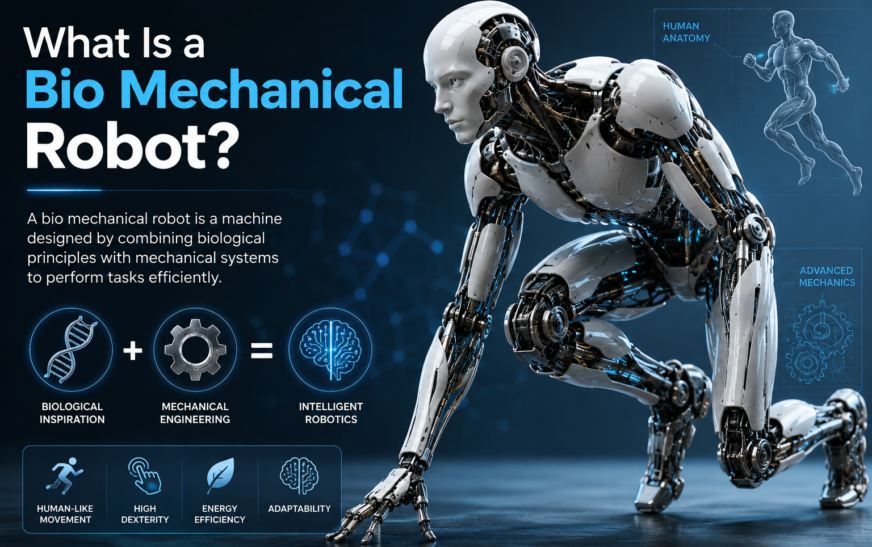
A biomechanical robot is an advanced robotic system engineered using biological principles, human anatomical structures, or mechanical mimics of living muscle and bone networks. Instead of relying on rigid, single-axis motorized joints, these machines replicate organic movement, structural flexibility, and adaptive force distribution. What Is a Bio mechanical Robot at its core comes down to this biology-inspired design philosophy.
Understanding the Meaning of Biomechanical Robotics
The term biomechanical combines biology, the study of living organisms, and mechanics, the study of forces and motion. When applied to robotics, it describes machines designed around organic force distribution, tendon-driven motion, and structural load-bearing concepts observed in nature.
Engineering labs utilize synthetic tendons, flexible polymers, and pneumatic artificial muscles to emulate organic tissue. These components allow a machine to absorb impacts, bend naturally, and handle delicate objects without crushing them. Biomechanical refers to applying mechanical principles like force and motion to living systems, such as how bones act as levers and muscles generate force. Based on this concept, a biomechanical robot is built using flexible joints, tendon-like cables and elastic materials instead of rigid metal, allowing it to move and absorb impact just like a living organism.
Types of Biomechanical Robots
Biomechanical robotics generally falls into three practical categories, each solving a different real-world problem.
Biomimetic Humanoids: Full-body robots engineered with a complete synthetic skeleton and hundreds of individual artificial muscles, designed to replicate natural human flexibility, balance, and fine motor tasks like grasping tools.
Wearable Exoskeletons: Suits worn directly by humans factory workers or rehabilitation patients that track real-time muscle signals and deliver precisely timed mechanical support to reduce fatigue or help restore natural walking patterns.
Advanced Bionic Prosthetics: Motorized replacement limbs for amputees that sense the user’s natural movement intent and adjust force output accordingly, blending mechanical precision with human biology.
Robots vs. Humans and Robot Categories
Humans are natural biological organisms, not robots; the term “biorobot” only applies to engineered biohybrid systems combining living tissue with mechanical parts. Robots themselves are generally classified into five types: pre-programmed, humanoid, autonomous, teleoperated, and augmenting robots like exoskeletons and prosthetics.
Real-World Examples and Applications
A well-known real-world example is Tesla’s Optimus, a humanoid robot by Elon Musk that uses AI-driven movement and biomechanical-style joints. This falls under the broader field of biorobotics, which also includes prosthetic hands, cheetah-inspired quadrupeds, and fish-like underwater robots, with practical use in surgery, exoskeletons, and safer human-robot interaction.
Biohybrid Robots and Cultural References
Unlike biomechanical robots which are fully synthetic, biohybrid robots use actual living tissue for movement, a concept unrelated to the Chernobyl “bio-robots,” which were actually human liquidators, not machines. Separately, the biomechanical tattoo art style visually represents this human-machine fusion by showing torn skin revealing mechanical parts underneath.
Why Biomechanical Robots Are Different From Traditional Robots
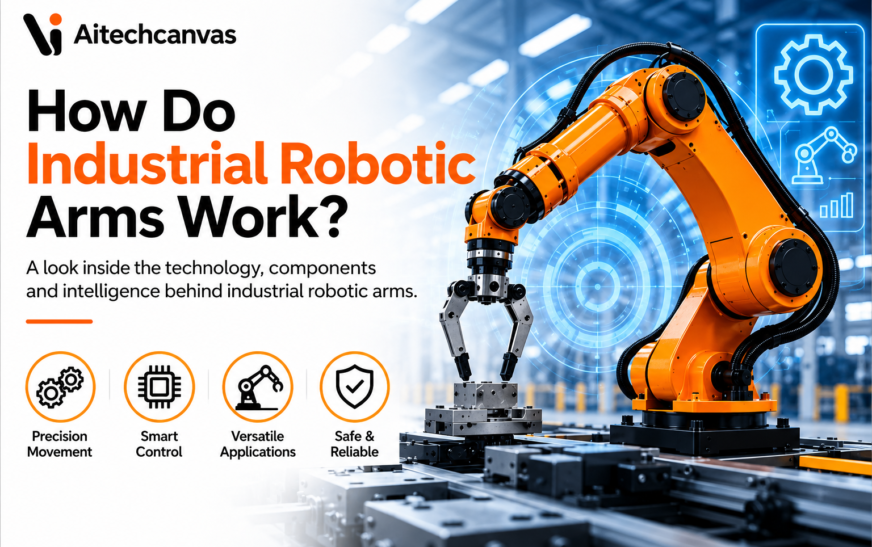
Traditional industrial robots excel at high-speed, repetitive tasks inside structured environments. However, their heavy steel limbs, high-torque gearboxes, and rigid joints can make them clumsy, energy-inefficient, and potentially dangerous around humans. Industrial robotic arms, for example, are typically designed for precise, repetitive operations such as welding, assembly, painting, and material handling. They rely on rigid mechanical structures and powerful actuators to deliver consistent performance, but this rigidity limits their ability to naturally adapt to unpredictable environments and safely interact with people.
- Structural Composition: Traditional machines use rigid aluminum or steel frameworks. Biomechanical designs integrate flexible joints, compliance materials, and lightweight composite alloys.
- Actuation Systems: Standard units rely on electric servomotors and rigid gear trains. Biomechanical versions frequently deploy fluidic actuators, artificial muscle wires, and elastic cable systems.
- Safety and Interaction: Rigid arms exert intense physical force on collision. Biomechanical units absorb energy dynamically, reducing risk during close human interaction.
- Energy Consumption: Conventional motors continuously draw power to hold physical positions. Biomechanical systems store mechanical energy in flexible elastic elements similar to biological tendons.
The transition toward flexible materials allows these devices to navigate uneven terrain, handle unpredictable payloads, and operate alongside human workers safely.
How Biology Inspires the Design of Modern Robots
Biological organisms evolved over millions of years to achieve maximum mobility with minimal energy expenditure. Observing human legs, bird wings, and animal muscular networks provides ready-made structural blueprints for modern mechanical engineers.
The Role of Human Anatomy in Robotic Engineering
Human movement depends on a complex interplay between bones acting as levers, muscles functioning as force generators, and tendons acting as energy storing springs. Replicating these exact mechanics in hardware enables humanoid machines to walk, climb, and balance naturally.
Engineers study human joint kinematics to recreate complex multi-axis motion in mechanical shoulders, wrists, and ankles. Implementing tendon-driven hands allows robotic fingers to wrap securely around irregularly shaped objects without requiring complex control algorithms for every joint.
How Nature Influences Robotic Movement
- Cheetah-inspired quadrupeds utilize flexible spines and spring-loaded legs to achieve high speeds while maintaining ground traction.
- Avian-inspired aerial units adjust wing curvature dynamically during flight, improving wind resistance and stability over fixed-wing drones.
- Fish-inspired marine vehicles leverage flexible undulating tails to glide through water column environments while using significantly less electrical power.
These natural design strategies allow robotic systems to move past rigid linear movements and adopt fluid, energy-efficient motion patterns suited for real-world terrain.
How a Bio mechanical Robot Works
Now that we’ve defined What Is a Bio mechanical Robot, let’s look at how it functions internally. A functional biomechanical robot requires three synchronized core layers: a flexible physical framework, an adaptive actuator network, and a responsive control center capable of processing real-time environmental force feedback.
Mechanical Structure and Artificial Joints
The physical chassis uses specialized high-strength polymers, carbon fiber composites, and 3D-printed lattice structures that mirror biological bone density, representing an innovative approach within the robotics industry. Joints do not rely on simple center pins; instead, they employ rolling contact surfaces lined with elastomeric materials that act like natural cartilage.
Synthetically woven cables made from ultra-high-molecular-weight polyethylene serve as tendons. These cables route through internal guide channels to distribute mechanical pull forces across multiple joints simultaneously, just as muscles operate across human limbs. This bio-inspired design demonstrates how the robotics industry is increasingly exploring lightweight, flexible, and energy-efficient mechanisms inspired by biological systems.
Sensors, Actuators, and Intelligent Control Systems
Continuous spatial awareness requires deep sensor integration. Modern systems incorporate embedded strain gauges, tactile pressure films, and internal inertial measurement units to read physical forces instantly.
- Pneumatic Artificial Muscles: McKibben-style muscle tubes expand radially and contract axially when pressurized, delivering explosive mechanical force with low dead weight.
- Shape Memory Alloys: Nickel-titanium wires contract when heated by electrical currents, delivering precise linear pulls within confined spatial footprints.
- Tactile Sensor Skins: Flexible arrays of piezoresistive sensors map contact force across entire limb surfaces, enabling subtle grip force control.
How Artificial Intelligence Improves Movement and Decision-Making
Hardware compliance alone cannot solve complex balance problems. Neural networks and reinforcement learning algorithms calculate physical dynamics thousands of times per second to refine movement commands.
When a biomechanical foot hits an unseen rock, onboard sensors detect the unexpected inclination angle instantly. Instead of stalling or falling, the neural control algorithm adjusts cable tension across opposing artificial muscle pairs, maintaining upright balance before the main central processor finishes calculating the complete path trajectory.
Recent developments in this space include full musculoskeletal humanoid platforms such as research prototypes using thousands of synthetic Artificial Intelligence arranged across a synthetic skeleton that closely replicate the flexibility and tool-handling ability of human limbs.
Biomechanical Robots vs. Biohybrid Robots
While biomechanical robotics uses engineering materials to mimic living systems, biohybrid robotics directly incorporates actual living biological tissue into physical machine assemblies.
What Are Biohybrid Robots?
A biohybrid robot integrates living cell structures, such as cultured mammalian heart muscle cells or skeletal muscle tissue strips, onto synthetic flexible scaffolds. Electrical impulses stimulate these living cells, causing them to contract naturally and move the underlying mechanical structure.
Research laboratories build biohybrid micro-swimmers powered by living cardiac cells and insect-tissue actuators capable of responding to light stimuli. These systems rely on nutrient fluids to keep the organic tissue alive while operating.
Key Differences Between Biomechanical and Biohybrid Robots
- Primary Materials: Biomechanical units rely strictly on synthetic polymers, alloys, and electronic actuators. Biohybrid units use living cellular tissue combined with biocompatible polymers.
- Power Sources: Biomechanical systems use lithium-ion batteries, compressed air, or direct electrical lines. Biohybrid systems require chemical energy, such as glucose solutions, to fuel cellular metabolism.
- Lifespan and Durability: Biomechanical structures endure years of continuous operational exposure. Biohybrid tissue degrades quickly if environmental temperature, moisture, or nutrient levels shift outside strict biological limits.
- Operational Environment: Biomechanical units operate outdoors, in industrial plants, or in space vacuum environments. Biohybrid systems remain confined primarily to controlled biological lab environments and liquid media.
Both fields push robotic capabilities forward, but biomechanical engineering focuses on immediate practical deployment in real-world human environments. Understanding What Is a Bio Mechanical Robot in comparison to its biohybrid counterpart clarifies why each technology suits different real-world use cases.
Conclusion
The development of biomechanical robotics represents a fundamental shift in machine design. By stepping away from rigid steel structures and embracing the subtle, energy-efficient mechanics of biological life, modern engineers are constructing machines that navigate unpredictable terrain, assist human recovery, and operate safely alongside workers. Understanding What Is a Bio mechanical Robot today means recognizing this shift toward biology-inspired engineering. As soft material science, flexible sensor arrays, and neural processing continue to advance, the boundary between artificial engineering and biological capability will become increasingly seamless.
FAQs
Can biomechanical robots feel pain or sensation?
No, they don’t feel pain, but tactile sensors detect contact force to help adjust grip and movement safely.
Are biomechanical robots used in the military?
Yes, they’re used in defense research for exoskeletons that help soldiers carry heavy loads with less strain.
How much does a biomechanical robot cost to build?
Costs range from a few thousand dollars for basic prosthetics to millions for advanced humanoid research platforms.
Can biomechanical robots learn and improve over time?
Yes, most use machine learning to analyze movement data and gradually improve balance and coordination.
Will biomechanical robots replace human workers?
Not entirely, they’re designed to assist humans in demanding or medical tasks, not fully replace them.