
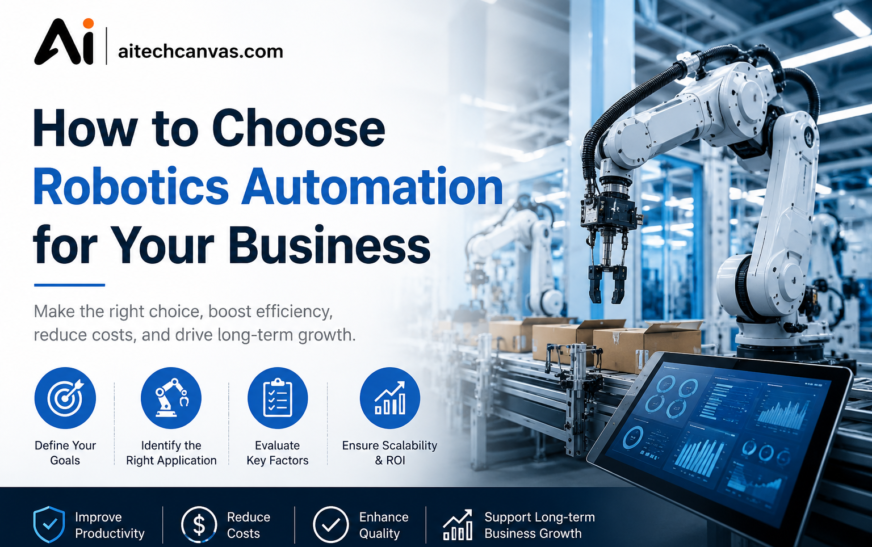
Choosing the right robotics automation system can help your business reduce repetitive work, improve accuracy, increase productivity, and prepare operations for future growth.
To choose robotics automation for your business, first identify repetitive or labor-intensive tasks, then define your required payload, reach, speed, accuracy, environment, safety, integration, scalability, and budget. Compare industrial robots, collaborative robots, robotic arms, mobile robots, and other robotic automation systems based on your specific workflow and expected ROI.
Robotics automation for business is becoming an important way for companies to improve productivity while managing rising operational costs, labor shortages, quality requirements, and changing customer expectations. From manufacturing and food processing to warehouses, retail, pharmaceuticals, and logistics, businesses can use robotics technology for businesses to automate repetitive, physically demanding, or high-precision activities.
However, choosing automation is not simply about buying the fastest or most advanced robot. The right solution depends on the task, production volume, workspace, payload, reach, accuracy, safety requirements, existing technology, workforce, and long-term business objectives. This guide explains how to choose robotics automation for your business, what factors to evaluate, which robot types may fit different applications, and how to determine whether an automation investment can deliver meaningful business value.
Understanding Robotics Automation
What Is Robotics Automation?
Robotics Automation combines robots, software, sensors, machine vision, control systems, and other automation equipment to perform tasks with limited human intervention. These systems can handle activities such as assembly, picking, packing, welding, palletizing, inspection, sorting, and material movement.
Unlike basic mechanical automation, modern automated robotics systems can often adapt to different products, work alongside people, collect operational data, and integrate with wider business systems.
For businesses, robotics automation can become part of a broader Business Automation solution, particularly when repetitive tasks consume significant employee time or create consistency and productivity challenges.
How Does Robotics Automation Work?
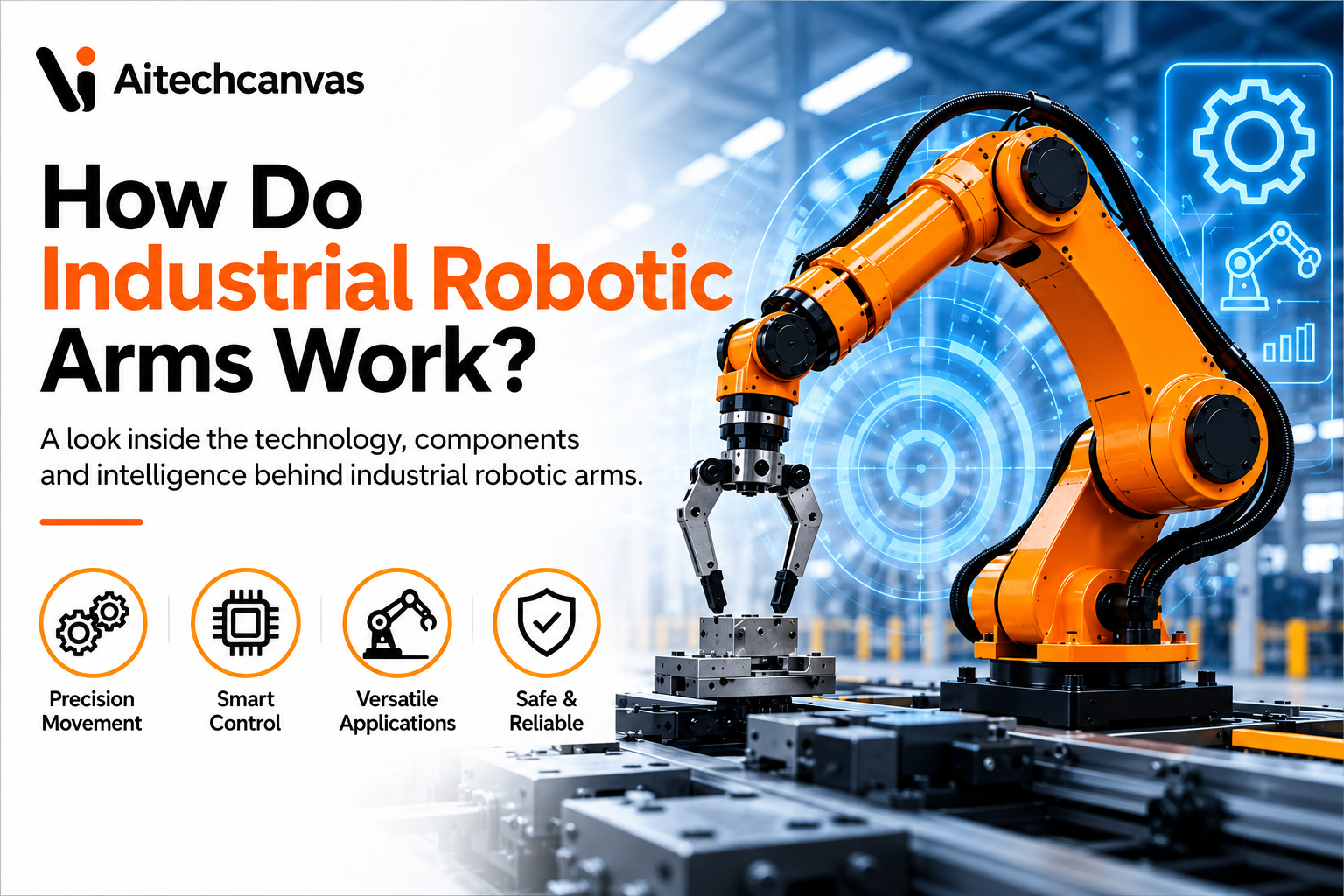
A typical robotic system receives instructions from a controller or software platform and uses sensors, cameras, programmed movements, and feedback to complete a task. Depending on the application, a system may combine a robotic arm with machine vision, conveyors, grippers, sensors, safety equipment, and production software.
The robot performs programmed actions while sensors provide information about objects, position, speed, or environmental conditions. This enables robotic integration for business and allows automated workflows to operate as part of an existing production or logistics process.
What Is the Difference Between Robotics and Automation?
Robotics refers specifically to machines capable of performing physical actions, while automation is the broader concept of using technology to perform processes with reduced human intervention.
A business can use automation without robots for example, automated software workflows or control systems. Robotics automation combines both concepts by using robots as part of an automated process.
Choosing the Right Robotics Automation System
How Do I Choose Robotics Automation for My Business?
Start by identifying the business problem you want to solve rather than selecting a robot first. Review your existing workflow and determine which activities are repetitive, physically demanding, time-consuming, dangerous, or prone to errors.
Next, define the technical requirements, including payload, reach, speed, accuracy, cycle time, operating environment, safety, integration, and scalability.
Finally, compare available robotics automation solutions according to total cost, expected productivity improvements, implementation requirements, maintenance, and ROI.
How to Select a Robotic Automation System
A practical selection process can follow these steps:
- Conduct a robotics audit.
- Identify the best automation opportunity.
- Define technical requirements.
- Choose the appropriate robot type.
- Evaluate safety and workspace requirements.
- Check software and system integration.
- Calculate total investment and expected ROI.
- Consider future expansion.
- Test the solution where possible.
- Select an experienced integration partner.
This approach helps prevent businesses from choosing technology that looks impressive but does not solve their actual operational problem.
What Type of Robot Is Best for My Business?
There is no single robot that is best for every business. Industrial robots are generally suitable for demanding, high-volume applications, while collaborative robots (cobots) can be useful where flexibility and human-robot collaboration are important.
Autonomous mobile robots may be appropriate for transporting materials around warehouses or production facilities. Robotic arms can handle applications such as assembly, picking, packaging, welding, and inspection.
The correct choice depends on your workflow, load, speed, precision, environment, safety requirements, and production volume.
What to Consider Before Choosing Robotics Automation
Before investing in business robotics automation, consider:
- The task you want to automate
- Production volume
- Product variation
- Payload requirements
- Robot reach
- Accuracy and repeatability
- Cycle time
- Workspace
- Environmental conditions
- Safety requirements
- Software compatibility
- Employee training
- Maintenance
- Scalability
- Total cost
- Expected ROI
Factors to Consider When Choosing Robotics Automation
The most important selection factors are not limited to the robot itself. Businesses should evaluate the complete automation system, including end-of-arm tooling, machine vision, conveyors, sensors, safety systems, software, programming, integration, and maintenance.
A complete evaluation provides a better understanding of whether the proposed smart automation solution can operate reliably in the real production environment.
How to Evaluate Robotics Automation Solutions
Evaluate each solution against the same criteria so you can make an objective comparison. Consider performance, reliability, flexibility, integration, safety, programming requirements, support, maintenance, scalability, and lifecycle cost.
It is also useful to calculate the expected improvement in productivity, quality, labor utilization, throughput, and downtime before making a final decision.
What Factors Should I Consider Before Buying a Robotic System?
Before buying a robotic system, verify that the robot can handle your current requirements and potential future requirements. A system that only meets today’s specifications may become a limitation as production expands.
Pay particular attention to payload, reach, cycle time, accuracy, product variation, environmental conditions, safety, integration, programming, maintenance, and available technical support.
Implementing Robotics Automation in Your Business
Once you know which system fits your requirements, the next step is implementation. Successful robotics integration for business requires more than installing a robot.
How to Implement Robotics Automation
Begin with a clearly defined process and measurable objectives. Prepare the workspace, equipment, software, safety systems, and employee training requirements before installation.
The implementation should normally include:
- Process assessment
- System design
- Robot selection
- Equipment integration
- Programming
- Safety validation
- Testing
- Employee training
- Production launch
- Performance monitoring
Robotics Automation Implementation Process
A structured implementation process helps reduce disruption:
Assess → Design → Select → Integrate → Program → Test → Train → Deploy → Monitor → Optimize
This process allows businesses to identify technical problems before full deployment and ensures the new robotic automation systems work with existing workflows.
How Do I Implement Robotics Automation in My Business?
Implementation should begin with a pilot or clearly defined automation project where possible. Establish performance benchmarks before deployment and compare results after implementation.
Businesses should also plan for robot programming, employee training, maintenance, spare parts, software updates, safety checks, and future system expansion.
Robotics Automation Requirements
Typical requirements may include:
- Suitable workspace
- Power and network infrastructure
- Robot and controller
- End-of-arm tooling
- Sensors
- Machine vision
- Safety equipment
- Programming software
- Integration with existing machinery
- Employee training
- Maintenance procedures
The exact requirements depend on the application and selected robotics solutions for businesses.
Benefits and Challenges of Robotics Automation
Benefits of Robotics Automation for Business
Robotics automation for business can provide several advantages, including:
- Higher productivity
- Consistent quality
- Improved accuracy
- Reduced repetitive manual work
- Better workplace safety
- Greater production capacity
- More predictable processes
- Reduced operational waste
- Improved workforce utilization
- Easier scalability
The biggest benefit comes when automation is applied to the right process rather than simply adding robots to an existing workflow.
What Are the Benefits of Robotics Automation?
The benefits vary by application. Manufacturing companies may improve production speed and consistency, while warehouses can use robots for picking, sorting, transportation, and fulfillment.
Businesses can also combine robotics with AI Automation Tools , robotics, machine vision, and Industry 4.0 technologies to create more intelligent and connected operations.
Challenges of Robotics Automation
Despite its advantages, robotics automation can involve challenges such as:
- High initial investment
- Integration complexity
- Employee training
- Programming requirements
- Maintenance
- Safety considerations
- Unexpected process variations
- Technology compatibility
- Downtime during installation
- Difficulty calculating ROI
Proper planning and professional robotic integration can reduce many of these challenges.
Is Robotics Automation Suitable for Small Businesses?
Yes. Small businesses can benefit from Robotics Automation when they select systems that match their scale and budget. Cobots, modular automation equipment, and flexible robotic systems can sometimes provide a more practical starting point than large fixed automation lines.
The key is to automate a process where the expected productivity or cost benefit justifies the investment.
Cost, ROI, and Maintenance
How Much Does Robotics Automation Cost?
The cost of robotics automation varies significantly depending on the robot, tooling, software, sensors, safety equipment, integration, installation, and application complexity.
Instead of considering only the robot’s purchase price, businesses should calculate the total cost of ownership, including installation, programming, maintenance, training, energy, upgrades, and potential downtime.
Robotics Automation ROI Calculation
Robotics automation ROI can be evaluated by comparing the total investment with the financial benefits generated by the system.
A simple approach is:
ROI = (Annual Benefits − Annual Automation Costs) ÷ Total Investment × 100
Potential benefits can include labor savings, increased output, reduced defects, lower downtime, improved safety, and reduced waste.
How Can I Calculate Robotics Automation ROI?
Start by establishing the current cost of the process. Then estimate how much the robotic system could improve productivity, labor utilization, quality, throughput, and downtime.
Compare those annual benefits with the initial investment and ongoing operating costs. Businesses should also consider the expected lifespan of the system rather than judging ROI only on the first year.
Is Robotics Automation Worth It for a Business?
Robotics automation can be worthwhile when the selected process has sufficient volume, repetition, labor requirements, quality demands, or safety risks to justify the investment.
The strongest projects typically solve a clearly defined operational problem and have measurable performance targets.
Robotics Automation Maintenance Requirements
Maintenance requirements depend on the robot and application. Businesses should establish preventive maintenance schedules, inspect mechanical components, check tooling and sensors, update software where required, and monitor system performance.
Training employees to identify early signs of equipment problems can also help reduce unexpected downtime.
Choosing the Right Robot System: Key Decision-Making Criteria
Consider the Specific Application
The application should be the starting point for robot selection. A robot used for welding may have very different requirements from one used for packaging, inspection, palletizing, or material handling.
Understanding the exact task helps determine the required robot configuration, tooling, speed, accuracy, and safety equipment.
Consider Payload and Reach
Payload refers to how much weight the robot can safely handle, including the end-of-arm tooling and product. Reach determines whether the robot can access the complete working area.
Always consider future product variations when defining these requirements.
Consider Accuracy and Repeatability
Accuracy and repeatability are especially important for assembly, machining, inspection, and other precision applications.
A robot may repeatedly return to the same programmed position even if absolute positioning accuracy differs. Therefore, businesses should evaluate both specifications according to the actual application.
Consider Speed and Cycle Time
Robot speed alone does not determine productivity. The complete cycleincluding picking, movement, processing, placement, and interaction with other equipmentshould be evaluated.
Calculate the required cycle time based on actual production targets rather than relying only on the manufacturer’s maximum speed.
Consider the Operating Environment
The environment can influence robot selection. Dust, moisture, temperature, chemicals, food hygiene requirements, and cleanroom conditions may require specific protection or robot configurations.
Environmental requirements should be established before selecting the system.
Consider Safety and Human Interaction
Safety is essential when implementing industrial robotics automation. Businesses need to consider guarding, sensors, emergency stops, risk assessment, safety-rated controls, and whether employees will work near the Robot.
Cobots can support human-robot collaboration in suitable applications, but they still require appropriate risk assessment and safety measures.
The Benefits of Working With an Expert System Integrator
An experienced system integrator can help connect Robots with conveyors, sensors, machine vision, PLCs, software, safety equipment, and existing production machinery.
This can be particularly valuable for businesses that do not have an internal robotics engineering team.
A good integrator can help with:
- Process assessment
- Robot selection
- System design
- Programming
- Integration
- Safety
- Testing
- Employee training
- Maintenance
- Future expansion
Choosing the Right Robotic System for Long-Term Success
The best robotic system is not necessarily the newest or most powerful model. It is the system that solves your current business problem while providing enough flexibility for future growth.
Look for robotics automation solutions that can accommodate product changes, additional workloads, software integration, maintenance requirements, and future automation opportunities.
Commercial Robotics Automation Solutions
Businesses looking for the best robotics automation for business should compare the best robotic automation systems based on performance, scalability, safety, and integration. Evaluating robotics automation companies, robotics automation vendors, and a reliable robotics automation provider can help organizations find suitable business robotics solutions. Small companies can explore robotics automation solutions for small businesses and affordable robotics automation options that match their budgets. Before investing, businesses should consider the cost of robotics automation, expected robotics automation ROI, and overall robotics automation investment. Effective robotics system selection ensures the chosen solution supports current workflows while providing flexibility for future growth, productivity, and operational efficiency.
Industry-Specific Robotics Automation
Robotics automation in manufacturing helps companies improve production speed, consistency, precision, and workplace safety. Manufacturing robotics solutions can support assembly, welding, packaging, inspection, and material handling. Meanwhile, robotics automation for warehouses enables businesses to automate picking, sorting, packing, and inventory movement. Warehouse robotics automation can improve fulfillment speed and reduce repetitive manual tasks.
In transportation and supply chains, robotics automation for logistics supports material movement, sorting, loading, and distribution processes. Healthcare organizations can use robotics automation for healthcare for laboratory tasks, pharmacy operations, disinfection, and material transportation. Similarly, robotics automation for retail can assist with inventory management, shelf monitoring, order fulfillment, and customer-service operations.
Agricultural businesses can benefit from robotics automation for agriculture through automated harvesting, crop monitoring, sorting, and other repetitive farming activities. The requirements of robotics automation for small businesses may differ because affordability, flexibility, and simple deployment are often priorities. In contrast, robotics automation for large businesses may involve high-volume production, multiple robotic systems, advanced integration, and centralized monitoring.
By selecting technology according to industry requirements, businesses can implement practical automation that improves productivity, reduces operational bottlenecks, and supports long-term growth.
Conclusion
Learning how to choose robotics automation for your business starts with understanding your operational needs rather than choosing a robot based on specifications alone. Begin with a robotics audit, identify the processes that can deliver the greatest value, and define requirements such as payload, reach, accuracy, cycle time, environment, safety, integration, and scalability.
Then compare industrial robots, cobots, mobile robots, robotic arms, and other robotic automation systems based on their ability to solve your specific problem. Finally, consider total cost, maintenance, employee training, integration, and expected ROI.
When properly planned, business robotics automation can become a practical long-term investment that improves productivity, consistency, safety, and operational flexibility.
Frequently Asked Questions
What Is Robotics Automation?
Robotics automation uses robots, software, sensors, and control systems to perform physical tasks with limited human intervention. Businesses use it for activities such as assembly, packaging, picking, inspection, welding, sorting, and material handling.
How Do I Choose Robotics Automation for My Business?
Identify repetitive or high-value tasks first, then evaluate payload, reach, speed, accuracy, environment, safety, integration, scalability, cost, and ROI. Compare the complete system rather than focusing only on the robot.
What Type of Robot Is Best for My Business?
It depends on your application. Industrial robots suit many high-volume and demanding processes, cobots suit suitable human-collaboration applications, and autonomous mobile robots can support material transportation and warehouse workflows.
How Much Does Robotics Automation Cost?
There is no single price because costs depend on the robot, tooling, software, safety equipment, integration, installation, programming, and maintenance. Total cost of ownership provides a more useful basis for comparison.
What Are the Benefits of Robotics Automation?
Key benefits include increased productivity, consistent quality, improved accuracy, reduced repetitive work, better safety, greater capacity, and improved workforce utilization.
Is Robotics Automation Suitable for Small Businesses?
Yes. Small businesses can start with targeted automation projects, cobots, modular systems, or other scalable solutions when the expected benefits justify the investment.
How Can I Calculate Robotics Automation ROI?
Compare the annual financial benefits from labor savings, increased output, reduced waste, quality improvements, and lower downtime against the total investment and ongoing costs.
What Factors Should I Consider Before Buying a Robotic System?
Consider application, payload, reach, accuracy, repeatability, cycle time, environment, safety, programming, integration, maintenance, scalability, total cost, and expected ROI.
What Is the Difference Between Robotics and Automation?
Robotics involves programmable machines that perform physical actions, while automation is the broader use of technology to reduce manual intervention. Robotics can therefore be one component of an automated process.
How Do I Implement Robotics Automation in My Business?
Start with an operational audit, select a suitable process, define technical requirements, design the system, integrate the equipment, program and test it, train employees, deploy the solution, and continuously monitor performance.