
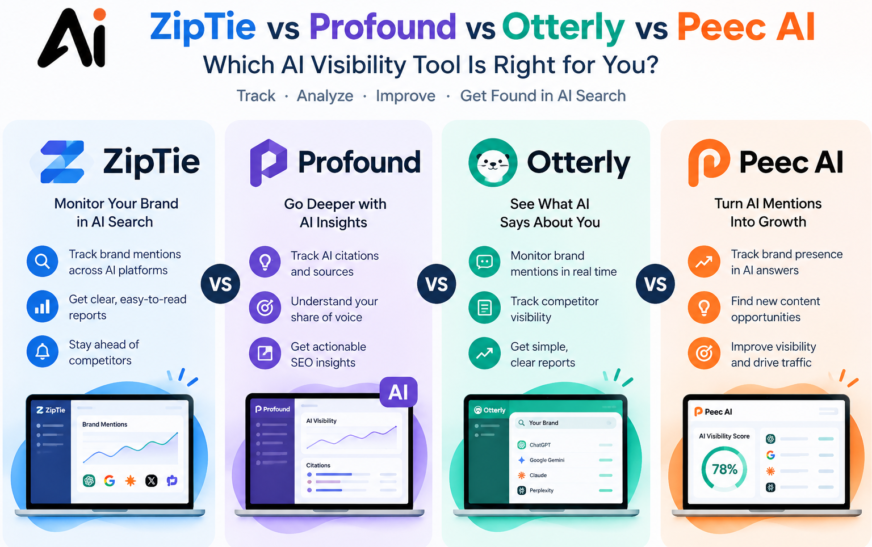
Your Google Rankings Are Good, but Is AI Search Recommending Your Brand? Your website may rank well on Google, yet ChatGPT, Perplexity, or Google AI Overviews might recommend your competitors instead. This creates a new challenge for businesses that want to stay visible as search behavior changes. Traditional SEO tools track rankings, backlinks, and organic traffic, but AI visibility tools help you understand whether AI-generated answers mention your brand, cite your pages, or recommend competing products.
In this guide, we compare ZipTie vs Profound vs Otterly vs Peec AI to help you find the right AI search visibility tool for your budget, team, and optimization goals.
There is no single winner for every business. Otterly AI is a practical starting point for users who want affordable AI visibility monitoring. Peec AI is worth considering for content teams and agencies that need focused analytics and shared reporting. ZipTie suits teams looking for configurable tracking and technical optimization workflows, while Profound targets enterprises that need broader analytics and AI-powered marketing capabilities.
Before choosing, compare the current price, prompt limits, supported AI engines, reporting features, and optimization options. The best tool is the one that provides useful, consistent insights your team can act on without exceeding its budget.
Key Takeaways
- Otterly AI: A budget-friendly starting point for AI visibility tracking.
- Peec AI: A candidate for teams that prioritize visibility analytics and collaboration.
- ZipTie: Useful for configurable tracking and technical SEO workflows.
- Profound: Designed for enterprise-level AI search analysis and marketing workflows.
- Pricing matters: Compare prompt allowances, engine coverage, refresh frequency, and additional fees.
- AI visibility is different from traditional SEO: A strong Google ranking does not guarantee an AI-generated mention.
- Action creates value: Use tracking data to improve relevant content, technical accessibility, and brand information.
What Is an AI Visibility Tool?
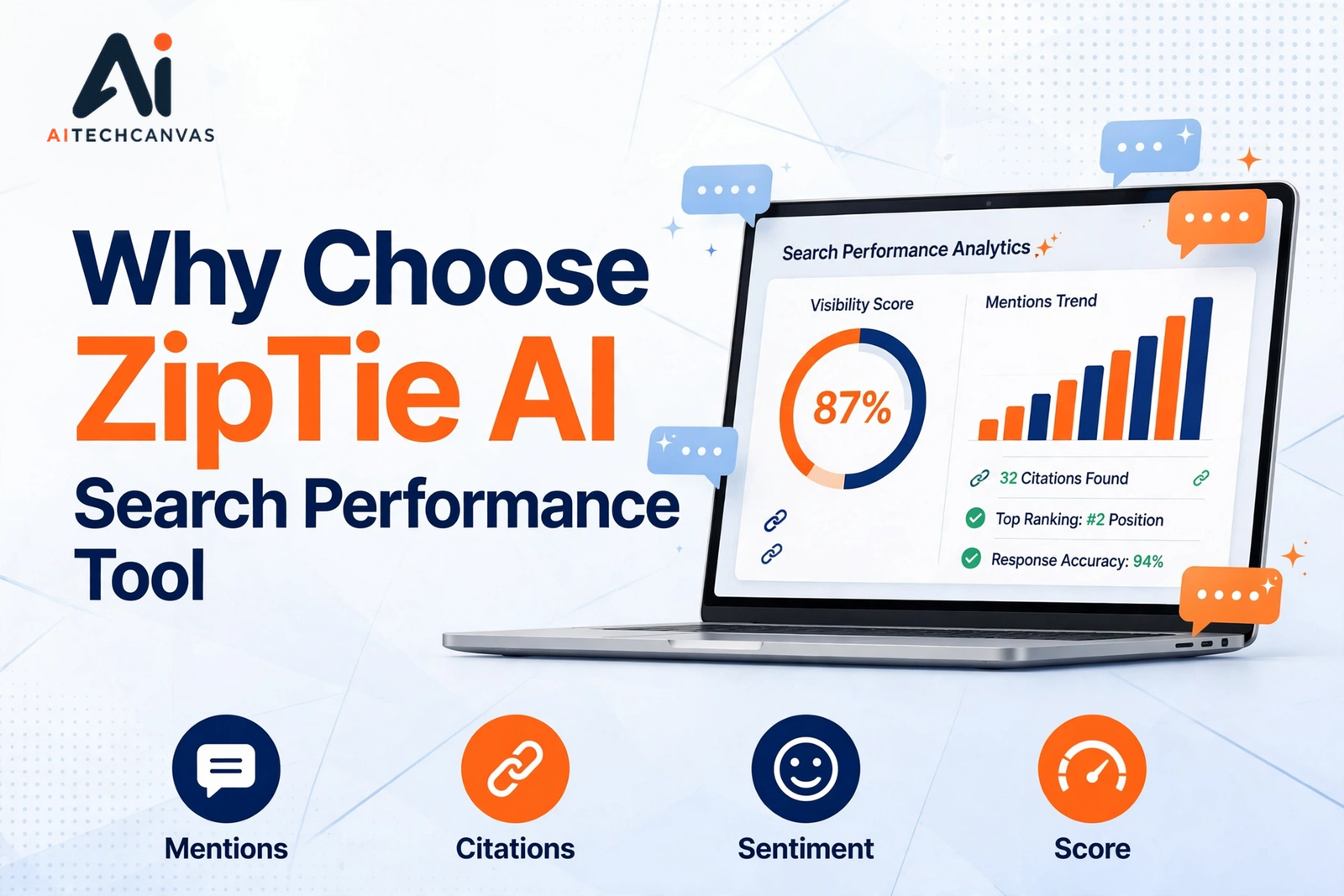
An AI visibility tool measures how often your business appears in AI-generated answers. It can track brand mentions, website citations, competitor recommendations, and other signals across supported platforms such as ChatGPT, Perplexity, Google AI Overviews, and Microsoft Copilot.
These platforms help marketers understand their presence in AI search rather than relying exclusively on traditional search rankings. Depending on the product, an AI visibility dashboard may also show sentiment, source-level performance, and optimization opportunities.
AI visibility tools are often associated with generative engine optimization (GEO) and answer engine optimization (AEO). However, they cannot guarantee that an AI platform will recommend your brand or increase your website traffic.
ZipTie vs Profound vs Otterly vs Peec AI: Comparison Table
| Feature | ZipTie | Profound | Otterly AI | Peec AI |
| Best suited for | Technical SEO teams and agencies | Enterprise marketing teams | Beginners and small businesses | Content teams and agencies |
| Pricing approach | Configurable pricing | Custom enterprise pricing | Published monthly plans | Published brand and agency plans |
| Brand visibility tracking | Yes | Yes | Yes | Yes |
| Competitor analysis | Yes | Yes | Yes | Yes |
| Citation analysis | Yes | Yes | Yes | Yes |
| Optimization support | Technical and content workflows | Broader AI marketing workflows | Monitoring and optimization insights | Analytics and optimization insights |
| Main consideration | Configuration affects cost | Obtain a current quote | Prompt limits and add-ons | Check model and plan limits |
Beginners and small businesses can compare ZipTie, Profound, Otterly, and Peec AI to find an affordable, easy-to-use AI visibility tool that fits their SEO goals, budget, and reporting needs.
ZipTie vs Profound vs Otterly vs Peec AI: Which Tool Offers the Best Value?
The best AI visibility tool is not necessarily the cheapest one. A low-cost subscription may have limited prompts or exclude important AI engines, while a more expensive plan may provide reporting and optimization features that save your team time. To compare these platforms fairly, examine the total monthly cost, engine coverage, reporting quality, and consistency of measurements. Also consider whether your team needs a simple dashboard or more detailed technical recommendations. Evaluate each platform against the same customer prompts and business goals. This approach helps you identify genuine value instead of choosing based on price or feature counts alone.
1. Pricing and Prompt Limits
Otterly AI offers a relatively low entry price among these four platforms, based on the published plans checked for this comparison. Peec AI has different brand and agency plans, ZipTie allows configurable tracking, and Profound focuses on enterprise pricing.
Compare the number of prompts, refresh frequency, included engines, and add-on costs. Check whether annual billing changes the effective price before making a decision.
2. AI Engine Coverage
AI visibility tools differ in the platforms and models they support. Before subscribing, check whether your preferred tool tracks ChatGPT, Perplexity, Google AI Overviews, Claude, or other engines relevant to your audience.
More coverage is not always better. Prioritize the platforms your potential customers actually use, and confirm whether each engine is included in your chosen plan.
3. Reporting and Optimization
A useful AI search visibility dashboard should show where your brand appears, which competitors receive recommendations, and which sources AI systems cite. It should also help your team identify the next steps.
ZipTie is worth evaluating for technical workflows, Profound for enterprise analytics, Peec AI for focused reporting, and Otterly AI for accessible monitoring. Compare actual reports before deciding.
4. Data Collection and Consistency
AI-generated responses can change between runs because of model updates, prompt wording, location, and other factors. Different tools may also collect responses differently, which can affect comparisons.
Ask vendors whether they use live interfaces, APIs, or other collection methods. Check how they handle repeat measurements and whether their reports explain the methodology. Consistency matters when tracking changes over time.
Which AI Visibility Tool Should You Choose?
The right AI visibility platform depends on your website, team size, budget, and SEO workflow. Small publishers may need basic monitoring, while agencies often require client reporting and larger prompt allowances. Technical SEO teams may prioritize audits and optimization recommendations, whereas enterprise brands may need broader analytics and marketing workflows.
Instead of relying on a universal ranking, shortlist two tools and test them using the same prompts. Compare their results, reporting quality, and total cost. Your goal should be to choose a platform that answers important business questions and helps your team improve its AI search visibility efficiently.
| Your situation | Recommended starting point | Why |
| Small website or blog | Otterly AI | Accessible entry-level monitoring |
| Content marketing team | Peec AI | Focused analytics and shared reporting |
| Technical SEO team | ZipTie | Configurable tracking and technical workflows |
| Large enterprise | Profound | Enterprise-oriented analytics and marketing workflows |
| SEO agency | Peec AI or ZipTie | Compare client management and total cost |
These recommendations are starting points, not guaranteed rankings. Confirm each platform’s current features and plan limitations.
How to Choose an AI Visibility Tool in Five Steps
Selecting an AI visibility tool becomes easier when you begin with your actual SEO goals. First, identify the questions your customers ask AI assistants. Next, select the engines relevant to your audience and determine how frequently you need to monitor results. Test shortlisted platforms using identical prompts, compare their reporting, and calculate the complete monthly cost. If you are considering ZipTie, read our guide on how to choose the right ZipTie AI search performance tool to evaluate its features for your SEO goals. Finally, establish a baseline so you can measure changes after updating your content. This process reduces the risk of paying for unnecessary features and helps you choose an AI search monitoring platform that supports your wider digital marketing strategy.
Step 1: Build a List of Customer Prompts
Start with 25–50 relevant questions if your plan and budget allow. Include buying advice, product comparisons, troubleshooting questions, and requests for recommendations.
For example, a software website could track “What are the best tools for automating business processes?” or “Which software is suitable for a small marketing team?”
Step 2: Identify the AI Engines That Matter
Choose the AI platforms your target audience uses most often. If ChatGPT and Google AI Overviews are your priorities, start there rather than paying for unnecessary engine coverage.
Expand your selection when your audience, business goals, or monitoring needs change.
Step 3: Test Reporting With Identical Prompts
Run the same customer prompts through each shortlisted AI visibility tool. Compare brand mentions, cited pages, competitor recommendations, and report quality.
Keep a record of differences. One platform’s visibility score should not automatically be treated as the definitive measurement of your brand’s AI search performance.
Step 4: Calculate the Full Monthly Cost
Include additional prompts, engine access, API usage, integrations, and any relevant client workspace costs. Compare equivalent configurations instead of headline prices.
For agencies, calculate the cost per client. For in-house teams, consider whether the platform saves enough research and reporting time to justify its subscription.
Step 5: Measure Results After Content Improvements
Record your initial visibility, improve relevant pages, and rerun the same prompts after an appropriate interval. Track changes in mentions, citations, and competitor presence.
Remember that AI responses fluctuate, so a change in visibility does not automatically prove that a particular content update caused the result.
How to Improve Your AI Search Visibility After Tracking It
An AI visibility tool is useful only when its insights inform practical improvements. Review the prompts where competitors appear more frequently, examine the sources cited in AI answers, and identify gaps in your own content. Improve your pages with clear explanations, relevant examples, accurate information, and descriptive headings. Check technical accessibility and ensure important pages can be crawled and indexed where appropriate. Keep your brand and product details consistent across trustworthy sources. Monitor results alongside organic traffic and conversions rather than treating visibility scores as guaranteed ranking factors. These steps support a more evidence-based approach to AI search optimization.
Create Clear, Useful Content
Answer customer questions directly and organize information with descriptive headings. Explain technical terms, provide practical examples, and avoid repeating keywords unnaturally.
Useful content serves readers first and can make your website easier to understand.
Strengthen Relevant Pages
Compare your content with pages that appear in AI-generated answers. Identify missing explanations, outdated facts, and questions your page does not address.
Improve the substance of your content rather than simply adding more keywords.
Check Technical Accessibility
Review indexing, crawlability, page rendering, internal links, and access restrictions. Investigate technical problems before changing important pages.
Remember that AI visibility tools may identify potential issues, but you should verify findings independently.
Build Trustworthy Supporting Information
Keep your product information, company details, author information, and factual claims accurate and consistent. Cite reliable sources where appropriate and add original examples or testing evidence when available.
Trustworthy information is more useful to readers than unsupported marketing claims.
Monitor Citations and Competitors
Review which pages and external sources appear repeatedly in AI answers. Use this information to guide content planning, source evaluation, and legitimate digital PR opportunities.
Measure progress over time instead of expecting immediate or guaranteed improvements.
Frequently Asked Questions About AI Visibility Tools
These frequently asked questions address pricing, platform differences, prompt selection, and the relationship between AI visibility monitoring and traditional SEO. They can help readers understand what these platforms measure before choosing a subscription. Verify current prices and supported engines directly with each vendor because plans can change. Remember that AI visibility metrics are diagnostic signals rather than guarantees of search rankings, citations, or website traffic.
Which Is the Cheapest AI Visibility Tool in 2026?
Among these four tools, Otterly AI had the lowest published entry price in the plans checked: $29 per month for its Lite plan with 15 prompts. Confirm the latest price, billing terms, and add-on costs before subscribing.
Is ZipTie Better Than Profound?
Neither is best for every organization. ZipTie is worth considering for configurable monitoring and technical optimization workflows, while Profound targets enterprise teams that need broader AI search analytics and marketing workflows.
Is Peec AI Worth the Price?
Peec AI may be worth considering if you need competitor comparisons, citation analysis, and shared reporting. Its value depends on your prompt volume, model requirements, budget, and how effectively your team uses its insights.
Is Otterly AI Suitable for Beginners?
Yes. Otterly AI offers an accessible starting point for monitoring AI visibility. However, review prompt limits and additional engine costs before expanding your tracking.
Do AI Visibility Tools Improve Google Rankings?
Not directly. These platforms measure how brands appear in AI-generated answers. Their insights may inform content and technical improvements, but subscribing does not guarantee better Google rankings or more AI citations.
How Many Prompts Should I Track?
Start with 25–50 relevant prompts if your subscription supports them. Prioritize buying questions, product comparisons, and queries closely related to your audience. Expand your list as you identify useful opportunities.
Can I Use an AI Visibility Tool With Semrush or Ahrefs?
Yes. Traditional SEO platforms focus on metrics such as rankings, backlinks, and organic performance, while AI visibility tools track brand presence in AI-generated answers. Using both can provide a broader view of your search visibility.
Final Verdict: Which AI Visibility Tool Wins in 2026?
There is no universal winner in the ZipTie vs Profound vs Otterly vs Peec AI comparison. Otterly AI is a practical choice for budget-conscious users, Peec AI suits teams seeking focused analytics and collaboration, ZipTie is worth considering for configurable tracking and technical workflows, and Profound targets enterprise organizations with broader analytics needs.
Before subscribing, verify current pricing, confirm the engines included in your plan, and test the same customer prompts across your shortlisted tools. Choose the platform that delivers useful insights at a sustainable cost. Consistent monitoring, accurate content, and practical improvements matter more than a large dashboard or a high visibility score alone.