

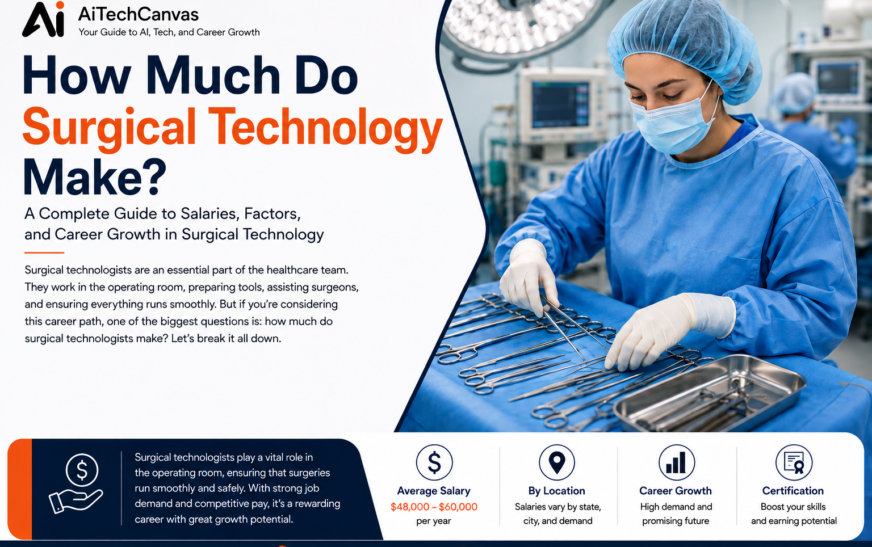
How much do surgical technology make? The average surgical technologist salary in the United States ranges from $58,000 to $75,000 per year, depending on experience, certification, employer, and location. Entry-level professionals typically earn between $45,000 and $55,000 annually, while experienced and certified surgical technologists working in high-demand hospitals can earn more than $90,000 per year. Travel surgical technologists and professionals in major metropolitan areas often receive even higher compensation through bonuses, overtime, and housing allowances.
Healthcare remains one of the fastest-growing industries in the United States, and surgical technologists are among the most important members of every operating room. These professionals prepare surgical instruments, maintain sterile environments, assist surgeons during procedures, and help ensure patient safety before, during, and after surgery.
Key Takeaways
- The average surgical Technology salary continues to grow because healthcare demand is increasing.
- Certification often leads to better job opportunities and higher pay.
- Experience plays a significant role in increasing annual earnings.
- Travel surgical technologists usually earn more than permanent employees.
- State, city, employer type, and specialty all influence salary.
- Hospitals generally offer better compensation than small clinics.
Career growth opportunities make surgical technology an attractive healthcare profession.As demand for surgical procedures continues to rise, many students and career changers ask, how much do surgical technology make before choosing this profession. Understanding salary expectations is essential because income varies depending on education, certification, experience, geographic location, employer, and specialty.
Whether you are considering enrolling in an accredited surgical technology program, becoming a Certified Surgical Technologist (CST), or simply researching healthcare careers, knowing the earning potential helps you make an informed decision.
Average Surgical Technologist Salary
The average surgical technologist salary has steadily increased over the past several years due to rising healthcare demands, advances in surgical procedures, and an aging population requiring more operations.
If you’re wondering how much do surgical technology make, the answer depends on several factors. Most surgical technologists earn a competitive income that grows throughout their careers.
Typical annual salary ranges include:
- Entry-level surgical technologists: $45,000–$55,000
- Mid-level professionals: $58,000–$70,000
- Experienced surgical technologists: $75,000–$90,000+
- Senior specialists and travel surgical technologists: $90,000–$120,000+
Professionals working in trauma centers, cardiovascular surgery, orthopedic surgery, and neurosurgery often receive higher salaries because these specialties require advanced skills and extensive operating room experience.
Surgical Tech Hourly Pay
Many people compare healthcare careers based on hourly wages rather than annual salaries. The surgical tech hourly pay generally falls between $28 and $40 per hour, although experienced professionals in major cities may earn substantially more.
Approximate hourly earnings include:
- Entry level: $22–$27 per hour
- Mid-career: $30–$36 per hour
- Experienced professionals: $38–$45+ per hour
- Travel surgical technologists: $45–$60+ per hour
Hourly wages increase through overtime, night shifts, weekend schedules, emergency surgeries, and specialized operating room assignments.
Entry-Level Surgical Tech Salary
Starting a career as a surgical technologist provides strong earning potential compared to many other allied healthcare professions.
Graduates from accredited surgical technology programs generally begin with salaries between $45,000 and $55,000 annually. While this may vary by state and employer, hospitals usually provide better compensation than physician offices or outpatient clinics.
At this stage, many employers also offer valuable benefits, including:
- Health insurance
- Retirement plans
- Paid vacation
- Continuing education assistance
- Tuition reimbursement
- Certification support
As new professionals gain operating room experience and complete additional certifications, their salaries often increase significantly within the first three to five years.
Experienced Surgical Tech Salary
Experience is one of the most important factors affecting income. Professionals with five to ten years of experience frequently earn much higher salaries because they can independently prepare operating rooms, anticipate surgeons’ needs, and manage complex surgical procedures.
If you continue asking how much do surgical technology make after gaining experience, you’ll find that experienced surgical technologists often earn $75,000 to $90,000 or more each year.
Those specializing in cardiovascular surgery, robotic surgery, transplant procedures, or neurosurgery can command even higher salaries due to their advanced technical expertise and ability to support highly specialized surgical teams.
In addition to higher base pay, experienced surgical technologists are often eligible for leadership positions, mentoring roles, shift differentials, performance bonuses, and overtime opportunities, all of which contribute to greater annual earnings.
Certified Surgical Technologist Salary
Becoming a Certified Surgical Technologist (CST) is one of the most effective ways to increase earning potential. Certification demonstrates professional competence, commitment to patient safety, and mastery of surgical procedures.
Many healthcare employers prefer certified candidates because they reduce training time and help maintain high standards in the operating room. As a result, certified professionals often earn higher salaries than non-certified surgical technologists.
Certification can also improve access to positions in larger hospitals, trauma centers, academic medical centers, and specialized surgical facilities where salaries and benefits are generally more competitive.
Surgical Tech Salary by State
One of the biggest factors influencing income is where you work. When people search how much do surgical technology make, they often discover that salaries can vary by tens of thousands of dollars depending on the state. States with a higher cost of living, advanced healthcare systems, and greater demand for surgical services generally offer higher wages.
Some of the highest paying states for surgical techs include:
California
California consistently ranks among the highest-paying states for surgical technologists. Large hospital networks, specialty surgical centers, and teaching hospitals provide competitive salaries, comprehensive benefits, and opportunities for career advancement.
Washington
Washington offers attractive salaries due to its growing healthcare sector and increasing demand for qualified surgical professionals.
Alaska
Although healthcare facilities are fewer in number, Alaska often provides higher compensation to attract skilled medical professionals to remote areas.
Massachusetts
With world-renowned hospitals and medical research centers, Massachusetts offers excellent earning opportunities for certified surgical technologists.
New York
New York’s major hospitals and specialized surgical centers pay above-average wages, particularly in metropolitan areas where healthcare demand remains high.
Other states with competitive salaries include Oregon, Nevada, Minnesota, Colorado, and Connecticut.
Highest Paying Cities for Surgical Technologists
While state averages are important, city-specific demand often has an even greater impact on earnings. Large metropolitan areas with major healthcare systems usually provide higher salaries due to increased living costs and greater demand for experienced professionals.
Some of the highest paying cities for surgical technologists include:
- San Francisco, California
- San Jose, California
- Seattle, Washington
- Boston, Massachusetts
- New York City, New York
- Los Angeles, California
- Denver, Colorado
These cities frequently offer additional incentives such as relocation assistance, sign-on bonuses, overtime opportunities, and professional development programs.
Hospital vs Outpatient Clinic vs Surgical Center Salary
Your employer also affects your income. Surgical technologists work in a variety of healthcare settings, each with different salary structures and responsibilities.
Hospital Surgical Tech Salary
Hospitals are generally the highest-paying employers because they handle emergency surgeries, trauma cases, and complex procedures around the clock. Employees may also receive night-shift differentials, overtime pay, and comprehensive benefit packages.
Outpatient Surgical Centers
Ambulatory surgery centers usually offer predictable work schedules with fewer emergency cases. While salaries may be slightly lower than hospitals, employees often enjoy better work-life balance and regular daytime hours.
Private Clinics
Private physician offices and specialty clinics generally perform less complex procedures. Compensation may be lower, but these workplaces often provide a less stressful environment and consistent schedules.
Government and Military Hospitals
Government healthcare facilities provide competitive salaries, excellent retirement benefits, and strong job security. Military medical centers also offer unique career opportunities for qualified surgical technologists.
Travel Surgical Tech Salary
Travel healthcare has become one of the fastest-growing career paths. The technologists work temporary assignments across different states. It is helping hospitals fill staffing shortages.
If you’re wondering how much do surgical technology make as a travel professional, earnings are often significantly higher than those of permanent staff.
Travel surgical technologists may receive:
- Higher hourly pay
- Housing stipends
- Travel reimbursement
- Meal allowances
- Completion bonuses
- Overtime opportunities
- Health insurance
- Retirement benefits
Experienced travel professionals can earn well over $100,000 annually, depending on assignment length, specialty, and location.
Factors That Affect Surgical Technology Earnings
Several variables determine how much a surgical technologist earns throughout their career.
Education
Graduating from an accredited surgical technology program improves employment opportunities and prepares candidates for certification exams.
Certification
Becoming a Certified Surgical Technologist (CST) demonstrates advanced knowledge and professional competence. Many employers prefer certified applicants and offer higher salaries accordingly.
Experience
Experience remains one of the strongest predictors of salary growth. Professionals who have spent years working in operating rooms develop valuable technical skills that increase their earning potential.
Specialty
Certain specialties require advanced expertise and therefore offer higher salaries.
Examples include:
- Cardiovascular surgery
- Neurosurgery
- Orthopedic surgery
- Organ transplant surgery
- Robotic-assisted surgery
- Pediatric surgery
These highly specialized areas often provide better compensation because they involve complex procedures and advanced surgical equipment.
Employer Type
Large healthcare systems, university hospitals, and trauma centers typically pay more than smaller outpatient facilities.
Geographic Location
Urban areas with greater healthcare demand generally offer higher wages than rural communities, although living expenses should also be considered when comparing salaries.
Surgical Technology Career Salary Growth
A career in surgical technology offers significant opportunities for salary progression. Most professionals begin with entry-level wages, but earnings increase steadily as they gain experience, complete certifications, and develop specialized surgical skills.
Career advancement may include positions such as:
- Senior Surgical Technologist
- Lead Surgical Technologist
- Surgical First Assistant
- Clinical Educator
- Operating Room Supervisor
- Surgical Services Manager
Each advancement brings greater responsibilities and increased compensation.
Surgical Technologist Job Outlook
The employment outlook for surgical technologists remains positive. Advances in medical technology, an aging population, and increasing demand for surgical procedures continue to create new job opportunities across hospitals and surgical centers.
Healthcare employers actively seek professionals who possess strong technical skills, attention to detail, and certification. Individuals who continue learning new surgical techniques and emerging technologies will likely enjoy better employment prospects throughout their careers.
In addition to strong demand, the profession offers excellent job stability because surgical procedures require skilled professionals to prepare equipment, maintain sterile environments, and assist surgeons during operations.
Is Certification Worth It?
Many prospective students ask whether certification truly makes a difference.
The answer is generally yes.
Certified professionals often receive:
- Better starting salaries
- More interview opportunities
- Increased employer confidence
- Greater promotion potential
- Higher lifetime earnings
- Access to specialized surgical departments
For many employers, certification has become an important hiring requirement, making it one of the best investments for long-term career success.
Surgical Tech vs Other Healthcare Careers
Many people compare surgical technology with other healthcare careers before choosing a profession. While salary is important, job responsibilities, education requirements, career growth, and work-life balance should also be considered.
Surgical Tech vs Registered Nurse (RN)
Registered Nurses generally earn higher average salaries because they have broader responsibilities, longer educational programs, and additional licensing requirements. However, becoming an RN usually requires more time and financial investment than becoming a surgical technologist.
Surgical technologists, on the other hand, specialize in assisting surgeons during operations, preparing sterile instruments, and ensuring patient safety in the operating room. For individuals who enjoy a fast-paced surgical environment without pursuing a nursing degree, surgical technology is an excellent career choice.
Surgical Tech vs Medical Assistant
Medical assistants typically work in physician offices and outpatient clinics, performing administrative and basic clinical duties. Their average salary is generally lower than that of surgical technologists because surgical technology requires specialized operating room training and technical expertise.
Surgical Tech vs Radiologic Technologist
Radiologic technologists operate diagnostic imaging equipment such as X-ray and CT machines. Both careers offer competitive salaries, but earnings depend on certifications, experience, employer, and location.
Surgical Tech vs Surgical Assistant
Surgical assistants have more advanced responsibilities during operations and often earn higher salaries than surgical technologists. Many professionals choose to gain experience as surgical technologists before advancing into surgical first assistant roles.
How to Increase Your Surgical Tech Salary
If you’re wondering how much do surgical technology make over the course of a career, it’s important to know that income can increase significantly with the right strategy.
Here are some of the best ways to maximize your earning potential:
Earn Professional Certification
Obtaining the Certified Surgical Technologist (CST) credential can improve employment opportunities and lead to higher salaries.
Gain Experience
Experience remains one of the strongest salary drivers. As your technical skills improve, you’ll qualify for leadership roles and more complex surgical specialties.
Specialize in High-Demand Procedures
Specialties such as cardiovascular surgery, orthopedic surgery, neurosurgery, transplant surgery, and robotic-assisted surgery often offer higher compensation.
Work in Larger Healthcare Facilities
Teaching hospitals, trauma centers, and university medical centers generally provide better salaries, stronger benefits, and more advancement opportunities than smaller facilities.
Consider Travel Assignments
Travel surgical technologists frequently receive premium hourly rates, housing stipends, travel reimbursement, and completion bonuses.
Continue Your Education
Advanced education and continuing professional development make you more competitive in the job market and open doors to supervisory or management positions.
Benefits Beyond Salary
Although salary is an important consideration, surgical technologists often receive valuable employment benefits that increase their total compensation.
Common benefits include:
- Comprehensive health insurance
- Dental and vision coverage
- Paid vacation and holidays
- Retirement savings plans
- Tuition reimbursement
- Continuing education support
- Overtime pay
- Shift differential
- Performance bonuses
- Professional certification assistance
These benefits can significantly improve overall financial security and long-term career satisfaction.
Is Surgical Technology a Good Career?
For many healthcare professionals, the answer is yes.
Surgical technology offers an excellent combination of competitive salaries, strong employment demand, career stability, and meaningful work. Every successful surgical procedure depends on a skilled operating room team, making surgical technologists essential members of modern healthcare.
If you’re still asking how much do surgical technology make, remember that earnings grow steadily with certification, experience, specialization, and geographic location. Many professionals enjoy rewarding careers that provide both financial stability and the opportunity to make a positive impact on patients’ lives.
The profession is particularly attractive for individuals who:
- Enjoy science and medicine.
- Thrive in fast-paced environments.
- Pay close attention to detail.
- Work well under pressure.
- Want a healthcare career without spending many years in medical school.
Conclusion
Surgical technology continues to be one of the most rewarding careers in the healthcare industry. Strong job demand, competitive salaries, excellent benefits, and multiple advancement opportunities make it an attractive option for students and career changers alike.
For anyone researching how much do surgical technology make, the answer depends on several key factors, including education, certification, experience, specialty, employer, and location. Entry-level professionals enjoy solid starting salaries, while experienced and certified surgical technologists working in specialized fields or travel assignments can earn substantially more.
As healthcare continues to evolve and the need for surgical procedures grows, qualified surgical technologists will remain in high demand. Investing in education, earning professional certifications, and gaining hands-on experience are some of the best ways to maximize earning potential and build a successful long-term career.
FAQs
How much do surgical technology make each year?
The average annual salary typically ranges from $58,000 to $75,000, while experienced professionals and travel surgical technologists can earn well over $90,000 annually.
How much do surgical technologists make per hour?
Most surgical technologists earn between $28 and $40 per hour, depending on experience, certification, employer, and location.
Does certification increase salary?
Yes. Becoming a Certified Surgical Technologist (CST) often leads to higher pay, better job opportunities, and faster career advancement.
Which states pay surgical technologists the most?
California, Washington, Alaska, Massachusetts, and New York are among the highest-paying states for surgical technologists.
Is surgical technology a high-paying career?
Surgical technology offers competitive salaries, especially for professionals who gain experience, earn certifications, specialize in advanced surgical procedures, or work as travel surgical technologists.
What factors affect surgical technologist salary?
Several factors influence earnings, including education, certification, years of experience, specialty, employer type, geographic location, overtime, and shift differentials.