
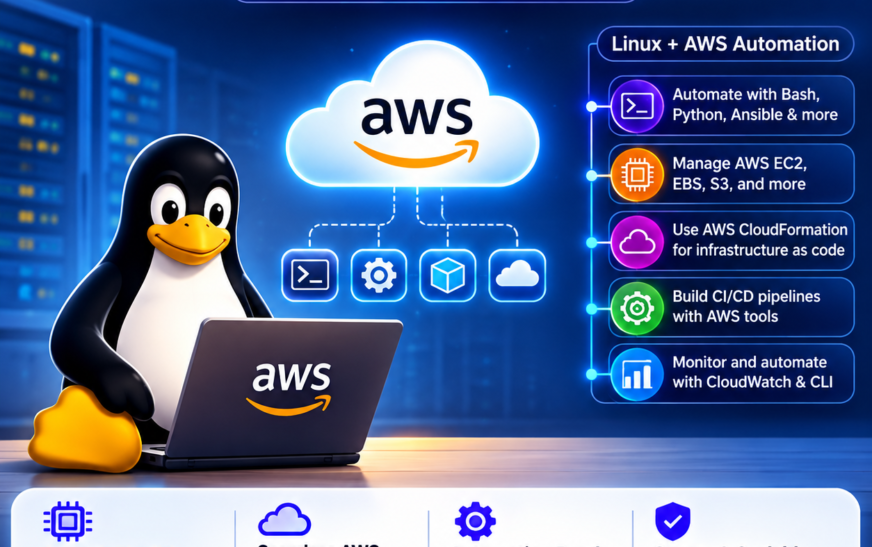
What if you could manage, deploy, update, monitor, and scale dozens of Linux servers without repeatedly logging into each one? That is exactly where AWS and Linux automation work so well together.
How is Linux automation friendly in AWS? Linux is highly automation-friendly in AWS because it works seamlessly with command-line tools, Bash and Python scripts, AWS CLI, Systems Manager, cloud-init, Terraform, Ansible, and other DevOps tools. Together, this Technology allows teams to automate server provisioning, configuration, patching, monitoring, deployments, backups, and scaling while reducing repetitive manual work. WhatsApp commerce can generate hundreds of customer conversations and sales, but manually calculating every salesperson’s commission quickly becomes difficult. How to implement automated sales commission tracking for whatsapp commerce is therefore an important question for businesses that want accurate attribution, faster reporting, and reliable payouts.
Key Takeaways
- Linux provides a powerful command-line environment for AWS automation.
- AWS CLI makes it possible to control many AWS resources from Linux terminals and scripts.
- AWS Systems Manager can automate routine Linux server administration.
- EC2 User Data and cloud-init help configure Linux instances automatically at launch.
- Terraform, CloudFormation, and Ansible can automate infrastructure and configuration.
- Bash and Python are useful for creating customized automation workflows.
- Automation improves consistency, scalability, speed, and operational efficiency.
- Security controls such as IAM roles should be built into automated workflows from the beginning.
Why Linux Is So Automation-Friendly on AWS
When asking how is linux automation friendly in aws, the answer starts with the design philosophy of Linux itself. Linux has long been used in server environments because administrators can control systems through powerful command-line utilities and scripts.
AWS complements this approach with APIs, command-line tools, Automation services, infrastructure-as-code platforms, and monitoring solutions.Instead of manually performing the same task on every server, administrators can create a script or automation workflow and execute it across multiple environments.
This makes Linux particularly useful for cloud infrastructure where resources can be created, modified, scaled, and removed frequently.For example, a company running multiple EC2 instances could automate tasks such as installing packages, configuring services, applying security updates, collecting logs, and restarting applications.
AWS CLI Makes Linux Automation Easier
The AWS Command Line Interface is one of the simplest ways to connect Linux administration with AWS services.From a Linux terminal, developers and system administrators can use AWS CLI commands to interact with EC2, S3, IAM, CloudWatch, Systems Manager, and many other AWS services.This becomes particularly powerful when AWS CLI commands are combined with Bash scripts.
For example, a basic workflow could:
- Identify running EC2 instances.
- Retrieve their metadata or status.
- Perform an administrative operation.
- Record the result.
- Send a notification if something fails.
Instead of repeating these operations manually, the workflow can be scheduled or triggered automatically. This is one of the major reasons how is linux automation friendly in aws is closely connected with shell scripting and AWS CLI automation.
Automating Linux EC2 Instance Provisioning
Amazon EC2 allows organizations to create Linux virtual machines on demand. However, creating an instance is only the first step. A newly launched server may still need packages, configuration files, users, application dependencies, monitoring agents, and security settings. AWS provides several ways to automate this process.
EC2 User Data
EC2 User Data allows scripts to run during instance initialization. A Linux Bash script can install software and configure services when a new instance launches. This means a new server can become application-ready without an administrator manually connecting to it.
Cloud-Init
Cloud-init is another important technology used for automatically configuring Linux cloud instances. It can handle tasks such as creating users, installing packages, configuring files, and executing startup commands. Together, User Data and cloud-init can turn a basic Linux EC2 instance into a standardized server automatically.
AWS Systems Manager for Linux Automation
AWS Systems Manager is particularly useful when managing multiple Linux instances. Instead of manually connecting to every server through SSH, administrators can use Systems Manager capabilities to perform operational tasks across managed instances.
Common automation scenarios include:
- Running commands across Linux instances
- Applying patches
- Managing configurations
- Executing automation runbooks
- Viewing operational information
- Managing parameters and configuration data
- Performing routine maintenance
This becomes increasingly valuable as an AWS environment grows. A process that might take hours when performed manually can potentially be converted into a repeatable automation workflow.
Bash and Python for AWS Linux Automation
Linux automation does not depend on a single programming language.
Bash Automation
Bash is ideal for straightforward system administration tasks. Administrators can create scripts for package installation, file management, service management, backups, log processing, and AWS CLI operations. For example, a Bash workflow could check whether a service is running and automatically restart it when necessary.
Python Automation
Python becomes useful when automation workflows become more sophisticated. With AWS SDKs such as Boto3, Python applications can communicate with AWS services programmatically. Developers can build workflows that process data, interact with APIs, manage resources, and implement more complex business logic.This combination of Linux, Bash, Python, and AWS APIs gives development teams significant flexibility.
Infrastructure as Code for Linux on AWS
Another major reason how is linux automation friendly in aws has a strong connection with DevOps is Infrastructure as Code, commonly called IaC. Instead of manually creating AWS infrastructure through a graphical interface, teams can define infrastructure using configuration files. Popular options include Terraform and AWS CloudFormation.
With IaC, a team can define resources such as:
- EC2 instances
- Virtual private clouds
- Security groups
- IAM resources
- Load balancers
- Databases
- Networking components
The same infrastructure configuration can then be reused across development, testing, staging, and production environments. This improves consistency and makes infrastructure changes easier to review and reproduce.
Ansible and Linux Configuration Management
Ansible is another popular tool for Linux automation. It can automate configuration tasks across multiple machines without requiring administrators to manually repeat the same commands.
For example, an organization could create an Ansible playbook that:
- Installs required packages
- Creates application users
- Configures services
- Updates configuration files
- Applies security settings
- Starts or restarts applications
This is especially useful when a business manages a large fleet of Linux servers. Ansible can also work alongside AWS infrastructure, allowing teams to combine cloud provisioning with server configuration.
Automating Linux Security and Patching
Security maintenance is another area where automation provides significant value . Manually checking every Linux server for updates can become difficult as infrastructure grows. Automated patching and configuration management can help organizations maintain more consistent environments. AWS Systems Manager provides capabilities for managing patches and operational tasks across supported instances.
Automation can also be used to monitor server status, collect logs, identify configuration differences, and trigger predefined responses. However, automation should not mean blindly applying every change. Production environments should include testing, approval processes, backups, and appropriate rollback strategies.
Monitoring Linux Servers Automatically
Monitoring is an essential part of AWS Linux administration. A properly automated environment can monitor metrics such as:
- CPU utilization
- Memory usage
- Disk capacity
- Network activity
- Application health
- System logs
- Service availability
AWS monitoring services can collect information from infrastructure and trigger actions when predefined conditions occur. For example, if disk usage reaches a critical level, an automated workflow could generate an alert. Depending on the architecture, another process might clean temporary files, expand storage, or initiate an operational response.
This approach reduces the need for administrators to constantly inspect servers manually and supports reliable system administration software practices. This approach reduces the need for administrators to constantly inspect servers manually.
Linux Automation and Auto Scaling
One of the biggest advantages of cloud infrastructure is elasticity. Applications may need more resources during busy periods and fewer resources during quieter periods. AWS Auto Scaling can help adjust infrastructure according to defined requirements. Linux automation makes this process more practical because newly created instances can automatically receive the required configuration.
A typical automated workflow could look like this:
Traffic increases → Auto Scaling launches an EC2 instance → User Data/cloud-init configures Linux → Application is installed → Monitoring starts → Instance joins the workload.
The process can happen with minimal manual intervention.
How Automation Improves AWS Operations
The real value of Linux automation is not simply that it saves a few commands. It changes how infrastructure is managed. Manual administration often introduces inconsistencies because different servers may receive slightly different configurations. Automated workflows execute predefined instructions consistently.
Automation can therefore improve business automation workflows:
- Speed: Tasks can run much faster than manual administration.
- Consistency: The same configuration can be applied repeatedly.
- Scalability: Processes can work across many instances.
- Reliability: Repeatable workflows reduce certain types of human error.
- Productivity: Administrators can spend more time on architecture and engineering rather than repetitive maintenance.
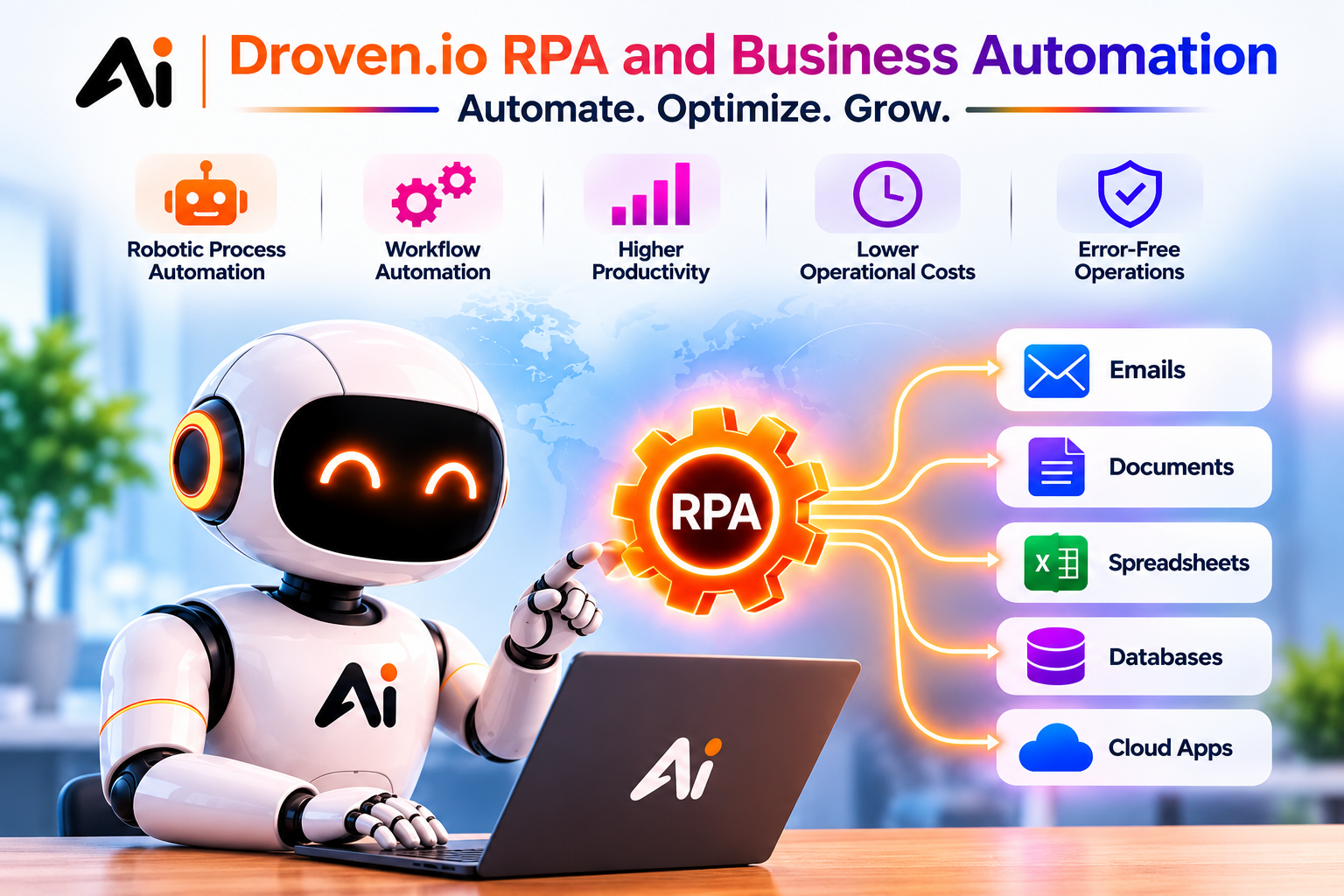
This explains how is linux automation friendly in aws from a practical DevOps perspective: Linux provides the scripting foundation while AWS supplies scalable cloud services and automation interfaces, similar to the automation principles used in RPA and business automation.
Best Practices for Linux Automation on AWS
Good automation requires more than writing scripts.
- First, use IAM roles and least-privilege permissions rather than giving automation unnecessary access.
- Second, keep scripts and infrastructure definitions under version control so changes can be reviewed and tracked.
- Third, test automation in a development or staging environment before applying it to production.
- Fourth, make workflows idempotent where possible, meaning running the same automation multiple times should not create unexpected results.
- Fifth, include logging and monitoring so administrators can determine whether an automated process succeeded or failed.
- Finally, always consider failure scenarios. A reliable automation system should have appropriate alerts, backups, validation, and rollback strategies.
Linux vs. Windows for AWS Automation
Both Linux and Windows can be automated on AWS, so the choice depends on the application’s requirements.Linux has a particularly strong position in cloud and DevOps environments because of its command-line tools, scripting capabilities, open-source ecosystem, and compatibility with technologies such as Bash, Python, Ansible, Terraform, and container platforms.
Windows may be the better option for workloads that depend heavily on Microsoft technologies or Windows-specific applications.Therefore, the goal should not simply be to declare one operating system universally better. Instead, organizations should select the platform that best matches their applications, team expertise, security requirements, and automation strategy.
The Future of Linux Automation on AWS
Cloud infrastructure is becoming increasingly automated.Infrastructure as Code, containers, serverless computing, AI-assisted development, observability, and event-driven architectures are changing how teams operate cloud environments.
Linux remains highly relevant because it provides a flexible foundation for many of these technologies. As organizations move toward DevOps and platform engineering, the ability to define infrastructure through code and automate operational processes will become even more important.
Understanding how is linux automation friendly in aws therefore isn’t just about learning Linux commands; it also means understanding how automation connects with AI automation tools and modern infrastructure workflows. It is about understanding how operating systems, cloud APIs, infrastructure-as-code tools, automation platforms, and DevOps practices work together.
Conclusion
Linux is an excellent foundation for AWS automation because it combines powerful scripting capabilities with a mature ecosystem of cloud and DevOps tools. From AWS CLI and Systems Manager to Terraform, Ansible, Bash, Python, User Data, and cloud-init, teams can automate almost every stage of Linux infrastructure management.
The key is to build automation carefully, use secure permissions, test changes, monitor results, and maintain everything as repeatable code. When these practices are combined, how is linux automation friendly in aws becomes clear: Linux provides the flexibility, while AWS provides the scalable infrastructure and automation services needed to operate modern cloud environments efficiently almost every stage of Linux infrastructure management. These same automation concepts are also relevant when building automation systems with Modbus.
Frequently Asked Questions
How is Linux automation friendly in AWS?
Linux works well with AWS because it supports command-line tools, Bash, Python, AWS CLI, Systems Manager, cloud-init, Terraform, and Ansible for automating infrastructure and server management.
What AWS tools can automate Linux servers?
AWS Systems Manager, AWS CLI, EC2 User Data, cloud-init, CloudFormation, Lambda, EventBridge, and Auto Scaling can all contribute to Linux automation workflows.
Can Bash automate AWS Linux servers?
Yes. Bash can work with AWS CLI and standard Linux utilities to automate tasks such as server configuration, deployments, backups, monitoring, and maintenance.
Is Linux better than Windows for AWS automation?
Linux is often convenient for DevOps and cloud automation because of its scripting ecosystem and command-line tools, but Windows can be the better choice for workloads that require Microsoft-specific technologies.
What is the biggest benefit of Linux automation on AWS?
The biggest benefit is the ability to perform repetitive infrastructure tasks consistently and at scale, reducing manual work while improving deployment speed and operational efficiency.